BYD says it wants to make EV charging feel much closer to a fuel stop. At a March 5 launch event in Shenzhen, the Chinese automaker introduced its second-generation Blade Battery together with a new “flash-charging” system, claiming the battery can go from 10% to 70% in five minutes and from 10% to 97% in nine minutes under normal conditions.
Those headline numbers matter on their own, but the bigger story is that BYD is trying to package battery technology and charging infrastructure as one competitive move. Alongside the battery launch, the company said it will build 20,000 flash-charging stations across China by the end of 2026 as part of its “Flash Charge China” strategy.
A battery upgrade aimed at a familiar EV problem
One of the biggest remaining barriers to EV adoption is not range on paper, but convenience in daily use. Long charging stops and weak cold-weather performance still shape how many drivers think about electric cars. BYD’s announcement is clearly aimed at both concerns.
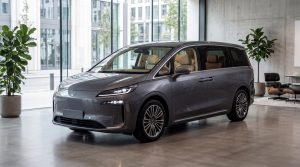
According to the company’s launch materials and same-day media reports, the second-generation Blade Battery improves energy density by more than 5% versus the first-generation version. BYD also said the Denza Z9GT equipped with the new battery can deliver up to 1,036 kilometers of range.
That combination is important because fast charging often raises concerns about trade-offs. BYD’s pitch is that it can improve charging speed without sacrificing battery efficiency, which would make the new platform more than a simple headline feature.
The charging claims are aggressive — and should be treated as company claims
BYD’s most attention-grabbing figure is its claim of a 10% to 70% charge in five minutes. The company also says the same system can go from 10% to 97% in nine minutes under normal conditions.
For cold weather, BYD says the charging slowdown is relatively small. The official company release states that charging from 20% to 97% at -30°C takes only three minutes longer than under normal temperatures. Same-day reporting from IT Home cited a Harbin test at -20°C that reached 20% to 97% in 12 minutes and said charging time in a -30°C environment remained below 12 minutes.
These numbers are notable, but they should still be presented with care. They come from BYD’s own launch materials and event reporting, not from long-term third-party testing across large fleets and real-world conditions. For readers, the takeaway is not that the debate is settled, but that Chinese EV makers are pushing the industry toward a new benchmark in charging speed.
Infrastructure is the bigger strategic story
The battery announcement may draw the headlines, but BYD’s network plan may prove even more consequential. The company said it aims to build 20,000 flash-charging stations nationwide by the end of 2026, a move that fits directly into the site’s broader EV Signals coverage.
That matters because charging speed claims are only as meaningful as the network that supports them. A battery that can accept extremely fast charging is valuable, but the consumer experience changes only when drivers can reliably find compatible stations in cities and on highways.
According to IT Home’s event coverage, the 20,000-station target includes 18,000 urban “station-in-station” sites and 2,000 highway flash-charging stations, with 1,000 highway sites targeted before the May Day holiday. Those figures add useful detail, but they should still be treated as media-reported rollout plans rather than independently verified construction results.
Why global readers should pay attention
This is not just another EV launch story. It is a sign that the competition among Chinese EV leaders is moving beyond vehicle pricing and design into a more integrated battle over battery chemistry, charging speed, and infrastructure scale. Readers who are new to the publication can also check about 1M Reviews for the site’s broader editorial focus.
If BYD can deliver even part of what it announced at mass-market reliability, it would help narrow one of the biggest convenience gaps between gasoline refueling and EV ownership. It would also reinforce the idea that the next phase of EV competition will be won not only by better cars, but by tighter coordination between vehicles and charging networks.
At the same time, there is a difference between a launch event promise and proven large-scale performance. The next question is whether BYD can translate impressive demonstration numbers into everyday use across different climates, vehicle segments, and charging environments.
Bottom line
BYD’s second-generation Blade Battery announcement stands out because it combines an ambitious charging claim with a nationwide infrastructure target. The battery specs drew attention, but the larger bet is that ultra-fast charging becomes more useful when it is paired with rapid network expansion.
For the EV market, that makes this more than a product update. It is an early signal that China’s leading automakers are trying to turn charging convenience into a full-stack competitive advantage.
Sources
- BYD official release: https://www.bydglobal.com/cn/news/2026-03-06/1617162762962
- IT Home battery launch coverage: https://www.ithome.com/0/926/291.htm
- IT Home charging network coverage: https://www.ithome.com/0/926/301.htm



2 thoughts on “BYD Unveils New Blade Battery and 20,000-Station Flash-Charge Push”