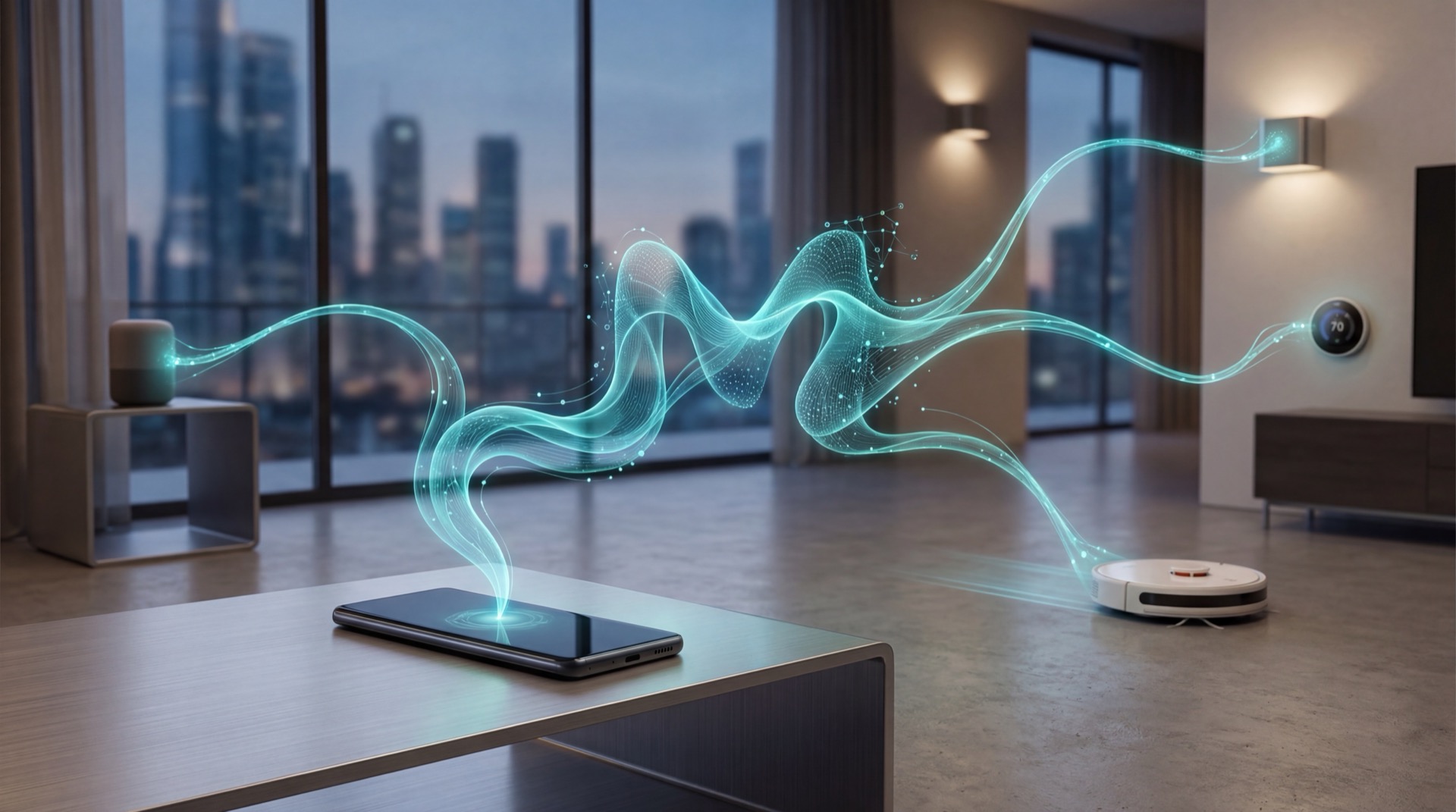
Xiaomi has started an invite-only closed beta for Xiaomi miclaw, an AI agent the company says is built on its in-house MiMo model and designed to execute tasks across phone functions and Mijia, Xiaomi’s smart-home platform. Announced by Xiaomi Tech on March 6, the project stands out because Xiaomi is not framing it as a standard chatbot or voice-assistant upgrade. The company is testing whether an AI agent can move from answering questions to actually taking system-level actions on a smartphone.
That makes this one of the clearest signals yet that the AI-phone race in China is shifting beyond generative features and into execution. Xiaomi’s own wording matters here. In its launch post and follow-up Q&A, the company says miclaw is meant to explore how large models can move from “dialogue capability” to “system-level execution capability” across its broader “human x car x home” ecosystem.
This is an execution-layer beta, not a mainstream consumer launch
The strongest editorial frame is not that Xiaomi has launched a finished AI breakthrough. It is that the company has opened a tightly controlled field test for a mobile agent that can reason over tools and carry out actions after user authorization.
According to Xiaomi and relay coverage from IT Home, miclaw can work across first-party apps, system tools, and connected-home controls. Xiaomi says it has packaged more than 50 system capabilities and ecosystem services into callable tools, allowing the model to choose tools, pass parameters, receive results, and continue iterating until a task is completed.
That is a much more ambitious pitch than a conventional assistant refresh. It suggests Xiaomi wants the phone itself to become an execution surface for AI, with the agent acting across apps and devices rather than staying inside a chat box.
Xiaomi is also being unusually clear about the limits
Just as important as the feature pitch is the launch boundary. Xiaomi repeatedly says miclaw is an exploratory product for enthusiasts and advanced users, not a mainstream public release. The beta is invite-only, not open for public sign-ups, and Xiaomi says it does not recommend installing the test build on a primary daily-use device.
The current trial is also narrow in device scope. Xiaomi says the beta is limited to five Xiaomi 17-series models and requires a specific system build delivered through ROM updates. That framing matters because it keeps the story grounded. This is not general availability, and it should not be covered as if Xiaomi has already pushed a stable AI agent to its wider phone base.
The caution is not only about access. Xiaomi also says the current version is still being optimized for stability, power consumption, and execution success in more complex scenarios. In other words, the company is presenting miclaw as a live test of a product direction, not as a fully mature software layer.
The bigger story is Xiaomi’s ecosystem play
What gives miclaw broader significance is how closely Xiaomi is tying it to its wider hardware and smart-home ecosystem. In the official launch materials, the company says miclaw is designed to operate inside Xiaomi’s “human x car x home” setup, not just on a single handset.
That ecosystem angle becomes more concrete in the Mijia integration story. Xiaomi says miclaw includes a full Mijia protocol client and can, with user authorization, read device states and send control commands across connected IoT products. The company also says the Mijia platform connects more than 1 billion devices.
Xiaomi is also signaling that the agent may not stay limited to Xiaomi’s own native services. The company says miclaw supports Model Context Protocol, or MCP, and offers an open SDK for third-party integration. If that vision develops as described, Xiaomi would be testing not just an AI assistant, but a system-level orchestration layer for phone functions, smart-home controls, and outside tools.
Related reading
- How Huawei’s AI Data Platform highlights the infrastructure layer behind enterprise AI
- Why China’s latest AI-device push matters for the global hardware race
- What recent humanoid-robot signals say about China’s next AI commercialization wave
Safety and privacy claims should be kept clearly attributed
Because miclaw is being pitched as a system-level agent, the trust and security story is central. Xiaomi’s March 6 Q&A, as relayed by IT Home, says miclaw runs with system-level privileges but still requires runtime authorization for access to areas such as contacts, messages, and calendars. Xiaomi also says higher-sensitivity actions require explicit confirmation and time out automatically if the user does not approve them.
The company further says the current version does not register built-in tools for payments, transfers, or order placement. That is one of the most important boundaries in the story because it directly addresses the fear that an autonomous phone agent could make sensitive financial actions on its own.
Xiaomi also says chat history, settings, permission records, and skill files are stored locally, while only the current conversation, audio, TTS text, Mijia control instructions, and search keywords are sent to the cloud for processing and are not persistently stored. Those claims should be treated as company statements rather than independently verified guarantees, but they are still a key part of how Xiaomi is trying to make the beta legible to users.
This is not a fully on-device AI milestone
Another boundary that matters for English-language coverage is compute. Xiaomi’s Q&A says the current version still depends on cloud services for LLM inference, automatic speech recognition, and text-to-speech. That means miclaw does not work in offline or weak-network environments for its core AI functions.
That detail is important because it stops the story from being overstated as a fully on-device breakthrough. The more accurate reading is that Xiaomi is testing a system-level mobile agent experience on the phone, while still relying on cloud infrastructure for key intelligence and voice functions.
Why global readers should pay attention
The reason this beta matters beyond Xiaomi’s own ecosystem is that it gives a more concrete look at where the next phase of AI phones may be headed. For the last year, much of the smartphone AI conversation has revolved around writing help, image tools, search, or assistant branding. Miclaw points to a more operational model in which the phone becomes a permissioned execution environment for AI.
That is also why the story has wider industry relevance. If large phone makers can turn AI from a conversational layer into an action layer, the competitive battleground shifts. The key questions become which company controls the best tool access, the safest permission model, the strongest ecosystem integration, and the clearest user-trust story.
Xiaomi has not proven that vision at scale yet. But by launching an invite-only beta instead of only talking about future possibilities, it has moved the conversation one step closer to real product testing.
Bottom line
Xiaomi’s miclaw beta is worth watching because it is not being sold as just another AI assistant. The company is using a limited, invite-only rollout to test whether a MiMo-powered mobile agent can execute tasks across phone tools and Mijia devices inside a controlled system environment.
The safest conclusion is not that Xiaomi has already solved mobile agents. It is that one of China’s biggest consumer-tech players has now made a serious public beta move toward turning the smartphone into an AI execution layer.