Dek: Huawei has added an OpenClaw mode to its XiaoYi open platform, creating a new path for users to connect 24/7 personal agents and signaling that HarmonyOS wants AI assistants to sit closer to native system entry points rather than remain standalone apps.
A lot of AI product news still lives at the app layer: a chatbot gets a new feature, a cloud assistant gains another integration, or a model gets wrapped into a mobile interface. What makes Huawei’s latest XiaoYi update more interesting is that it points in a different direction. The company is starting to treat personal AI agents as something that can be orchestrated through a system-facing platform layer, not only as standalone software.
According to a March 9 report from IT Home, Huawei’s XiaoYi Open Platform has added a new OpenClaw mode. The report says users can enter the XiaoYi app, choose Standard Create, and then select OpenClaw mode under the available orchestration options to connect a 24/7 personal AI agent. Huawei’s own developer page describes the XiaoYi Open Platform as a developer-facing layer that combines an intent framework with AI large-model capabilities, using HarmonyOS advantages to support multi-device, multimodal, integrated collaborative service distribution.
That combination is the real story. On the narrowest level, Huawei has added another agent-building mode to a developer platform. On the broader level, HarmonyOS appears to be moving personal-agent access closer to the operating-system service layer, where device entry points, intent routing, and cross-device coordination matter more than a single chat window.
What Huawei has actually added
The currently visible public record supports a specific and fairly disciplined set of claims.
First, Chinese tech media reported that OpenClaw mode now appears as one of the orchestration options on the XiaoYi Open Platform. Second, the same report says users can use that path inside the XiaoYi app to connect a round-the-clock personal agent. Third, Huawei’s developer page makes clear that the platform is not positioned as a basic chatbot wrapper. It is framed as an open platform for developers that brings together an intent system and large-model capabilities across the HarmonyOS ecosystem.
That matters because the phrase “open platform” can sound vague if it is not tied to product structure. In this case, the product framing is much more specific. Huawei is effectively telling developers that XiaoYi is a place where different agent-creation or service-orchestration modes can plug into a broader HarmonyOS service fabric.
IT Home’s report also says the platform now highlights four core modes: LLM mode, workflow mode, A2A mode, and OpenClaw mode. Even if the public material still leaves many implementation details undisclosed, that menu structure is meaningful. It suggests Huawei is not treating OpenClaw as a one-off third-party experiment. It is being placed alongside other core ways to build or route AI-driven services.
Why this matters more than a normal feature add-on
If Huawei had only added an OpenClaw shortcut inside one app, the story would be relatively minor. The stronger angle is that this sits inside a platform Huawei describes in system-distribution terms.
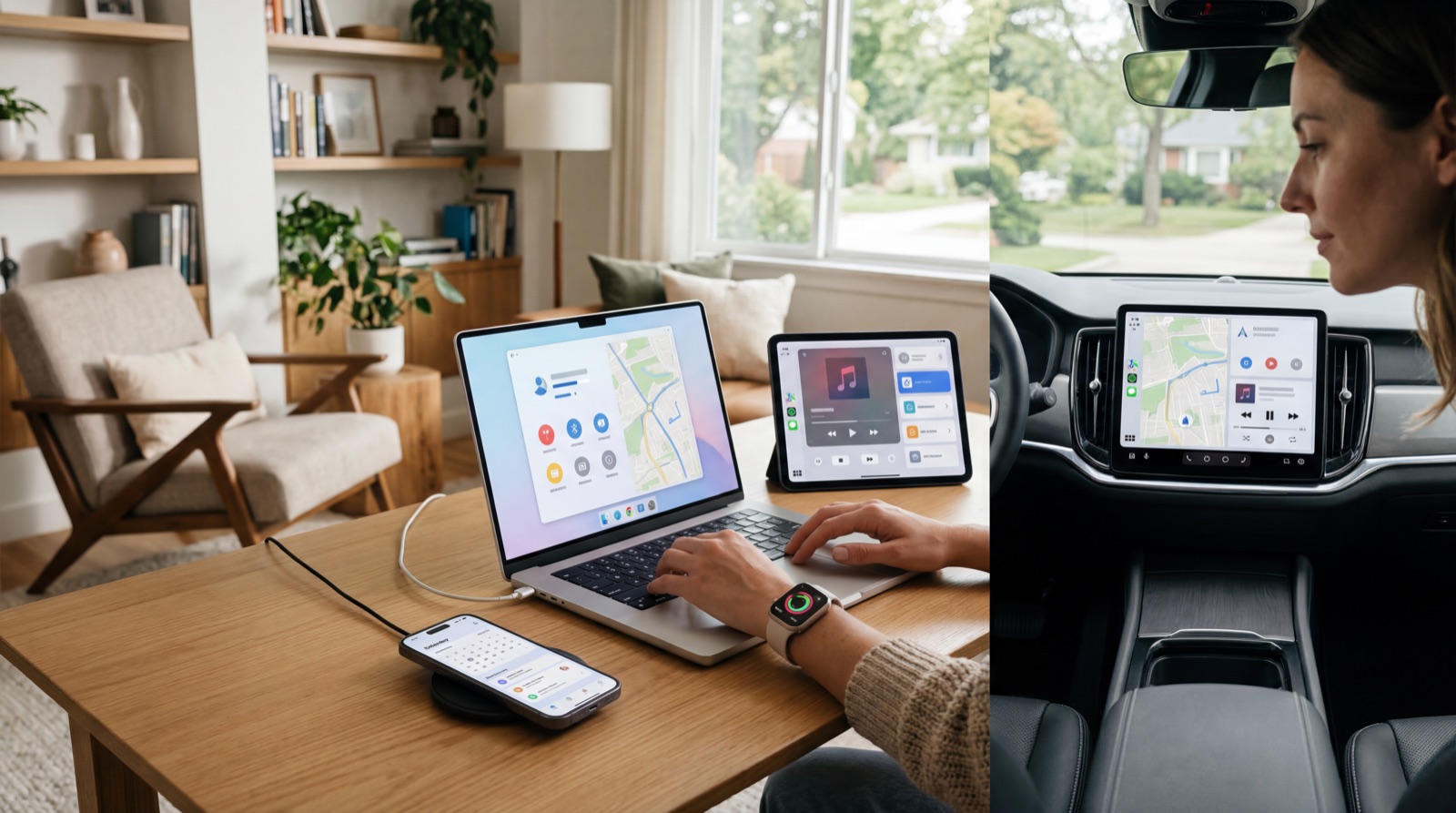
The official XiaoYi Open Platform description emphasizes multi-device and multimodal collaboration. That is classic ecosystem language, not isolated app language. In practice, it implies Huawei wants AI services to work across phones, tablets, PCs, cars, watches, and other HarmonyOS-linked endpoints through a shared service logic.
That is where the international significance starts to show. Many consumer AI products outside China still reach users mainly as standalone apps, browser tools, or cloud-assistant layers. Huawei’s move points toward something more infrastructural: personal agents becoming addressable through the operating system’s own service-routing and entry-point design. That broader platform shift also echoes Tencent’s Free OpenClaw Install Push Shows China’s AI-Agent Craze Moving Into the Cloud, where OpenClaw deployment is already being packaged for wider consumer onboarding.
That does not mean Huawei has already completed that transition. It does mean the company is laying visible product plumbing for it.
HarmonyOS is trying to make the entry point matter
Operating-system ecosystems have always competed on entry points.
Who owns the home screen, the default assistant surface, the notification layer, the voice trigger, the cross-device handoff, and the intent-routing framework usually controls more of the user relationship than any single app does. AI is now starting to push that same battle into the agent era.
What Huawei seems to be testing here is a simple but important proposition: a personal AI agent becomes much more strategic when it is not only installed somewhere, but reachable through native system pathways.
That matters for three reasons.
First, it lowers friction. A personal agent that plugs into an existing assistant layer has a better chance of being invoked in everyday tasks rather than sitting unused in a niche interface.
Second, it improves distribution. If the underlying platform already supports multi-device service handoff, the agent can theoretically travel more naturally across different endpoints in the HarmonyOS ecosystem.
Third, it gives Huawei more control over how third-party agent capabilities are packaged, surfaced, and standardized. In other words, the company is not only opening a door for personal agents. It is also shaping the hallway they have to walk through.
This is also an ecosystem-control story
For global readers, the strongest framing is not “Huawei added one more AI feature.” It is that Huawei is trying to turn personal-agent orchestration into ecosystem infrastructure.
That fits a much larger pattern in China’s tech market. The competition is no longer just about whose model scores higher, or whose chatbot feels more polished. It is increasingly about who controls the distribution layers that sit between models and daily user behavior. The same deployment-first logic also appears in China’s AI+Manufacturing Push Targets 1,000 Industrial Agents by 2027, where the emphasis is again on putting agents into real operating systems and workflows rather than treating them as isolated demos.
Huawei has already been pushing HarmonyOS as more than a phone operating system. It wants the platform to bind together multiple categories of devices and services. Adding OpenClaw mode to XiaoYi fits that logic because it brings the agent conversation into the same platform frame. That wider ecosystem framing also lines up with Huawei Sets March 10 HarmonyOS Connect Summit, Teasing a Broader Smart-Home Push, where the company is clearly trying to extend HarmonyOS across more device categories and service surfaces.
The implication is subtle but important: a personal AI assistant may no longer be defined only by what model powers it, but also by which operating-system ecosystem is willing to route it, host it, and surface it across devices.
That is a more durable strategic battleground than the familiar “who launched a chatbot first” cycle.
Why OpenClaw is a useful signal here
OpenClaw itself is not the whole point of the story. The more useful signal is what its inclusion says about Huawei’s platform design.
By adding an explicit OpenClaw mode, Huawei is showing that it sees value in supporting a pathway for users to connect a more personalized, persistent kind of agent experience. Chinese reporting around the update describes this as a route to building a personal exclusive agent that can run continuously.
That language matters because it is closer to the logic of an assistant relationship than to the logic of a single-use AI tool. A continuous agent sits closer to identity, memory, recurring tasks, and long-lived user context. Once that kind of agent touches a system-level assistant layer, the platform stakes become much larger.
This is also why the story fits 1M Reviews well. The news is not only about Huawei, and it is not only about OpenClaw. It is about how operating systems may start absorbing the agent layer as a native service category.
What not to overstate
This is exactly the kind of story that gets weaker when it is pushed too far.
The current source chain supports saying that Huawei’s XiaoYi Open Platform has added OpenClaw mode, that users can connect a 24/7 personal agent through the XiaoYi app’s standard creation flow, and that Huawei positions the broader platform around intent-based, multi-device, multimodal service distribution.
The current public material does not support saying that Huawei has already achieved mass commercial rollout, that all HarmonyOS devices now ship with full personal-agent support by default, or that the company has announced a complete list of business partners, user numbers, or deployment scale tied to this feature.
It is also too early to write as if Huawei has already proven a complete operating-system-level personal-agent strategy in the market. What the evidence currently shows is earlier and narrower: the platform plumbing is becoming visible.
That is still important. But the verbs should stay disciplined: adds, supports, introduces, and signals are justified. Has fully rolled out is not.
Bottom line
Huawei’s XiaoYi update matters because it suggests a shift in where personal AI agents may live inside the consumer stack.
Instead of staying outside the operating system as standalone apps or cloud-side chat layers, agents are starting to move toward native ecosystem entry points. Huawei’s new OpenClaw mode does not prove that the transition is complete. But it does show that HarmonyOS is beginning to build for that future in public.
If that direction continues, the next stage of AI competition may be less about who has another assistant app and more about which platform can make personal agents feel like part of the system itself.
Sources
- IT Home: https://www.ithome.com/0/927/368.htm
- Huawei Developer Alliance, XiaoYi Open Platform: https://developer.huawei.com/consumer/cn/celia