Xiaomi founder and CEO Lei Jun said on March 13 that the company will officially launch a new-generation Xiaomi SU7 this month, putting a quicker-than-expected update cycle on its first electric sedan. He said the model has been open for early reservations since early January and will sell in Standard, Pro and Max trims, with pre-sale prices of 229,900 yuan, 259,900 yuan and 309,900 yuan. The car will offer nine exterior colors, signaling a push to broaden appeal as China’s EV market stays intensely competitive.
Chinese tech outlet IT之家 and financial media Eastmoney reported the announcement, noting that Lei’s post confirmed both the March launch window and the pre-sale range. The three-tier pricing keeps the SU7 positioned in an upper-midrange band that is large enough to include aspirational buyers while still competing with mass-market rivals. That positioning matters for Xiaomi, which is still proving that its first vehicle can be more than a one-time hardware showcase.
Xiaomi has also rolled out the full palette of nine color options, including Capri Blue, Crimson Red and a newly revealed Indigo Green, according to IT之家 and MyDrivers. The breadth of colors is a concrete product signal rather than a cosmetic footnote: in China’s EV market, styling choices and personalization can be a key driver of showroom traffic. Announcing the complete palette before launch suggests Xiaomi wants design and customization to sit alongside performance and smart features in its marketing narrative.
Early reservations for the new-generation SU7 opened in early January, weeks after the original model’s production ramp, and Lei’s March timetable brings the official debut forward compared with expectations that pointed to April. That acceleration implies Xiaomi is moving quickly from its first mass-production cycle into a refreshed generation, an aggressive cadence for a newcomer brand building credibility in a crowded market. The short runway between reservation opening and official launch also gives Xiaomi less time to test demand—an indication of confidence or of a desire to seize early momentum.
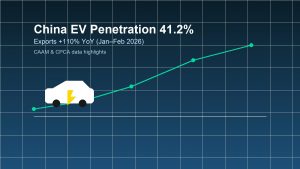
Industry data underline why the pace matters. The China Automobile Dealers Association and the passenger-car association reported that February new-energy vehicle retail penetration reached 44.9% across passenger cars, and 64.5% for domestic brands. In a market where EVs are becoming mainstream, every product cycle and brand signal can shift momentum, especially for a consumer electronics giant trying to establish itself as a serious automaker rather than an experimental entrant.
By keeping three trims and a wide color spread, Xiaomi appears to be aiming at both early adopters and mainstream buyers rather than a single niche. The 229,900–309,900 yuan band is broad enough to address buyers trading up from mass-market EVs as well as those cross-shopping premium domestic models, and the three-tier lineup gives Xiaomi room to differentiate by range, performance or smart features once final specifications are released. That structure also signals a strategy to segment demand without diluting the flagship image too early.
The early-January reservation window is also a useful market test. With a 229,900–309,900 yuan pre-sale range already public, Xiaomi can observe how interest clusters around each trim and adjust its launch-day mix accordingly. In China’s EV market, pre-sales often help manufacturers build an order book and manage supply planning before mass deliveries ramp up, so the timing of the SU7 reservations suggests Xiaomi wants a clearer demand signal ahead of the official event.
Another signal is the emphasis on the “new-generation” label so soon after the first SU7 launch. That messaging suggests Xiaomi wants to frame the sedan as an evolving platform rather than a one-off debut, a common strategy among established EV brands seeking to build long-term loyalty. The company’s use of pre-sale pricing ahead of the launch also indicates a desire to lock in interest before competitors adjust their own lineups for the busy spring release season.
What changed with the March announcement is that Xiaomi’s EV roadmap now looks faster and more ambitious: the SU7 line is moving into a new generation within its first year, with pricing and trim strategy already set. The next step is the official launch event later this month, where Xiaomi is expected to disclose final specifications, confirm any delivery timeline and show how the SU7 fits its broader auto strategy. That will clarify whether the new-generation SU7 is a modest refresh or a more substantial leap—and how strongly it can challenge other domestic EVs in the 230,000–310,000 yuan bracket.