China’s justice minister He Rong said at the Two Sessions “minister corridor” on March 12 that the government will accelerate legislative research on artificial intelligence (AI) and the low‑altitude economy in 2026, while revising the Road Traffic Safety Law and drafting Airspace Management Regulations. The Ministry of Justice’s English statement on March 13 reiterated that the legal framework will be upgraded to support technology innovation. The move puts AI governance and low‑altitude sectors such as drones and eVTOLs into a formal legislative timetable, signaling tighter rules alongside policy support.
Xinhua reported that He Rong called AI a high‑frequency topic at this year’s Two Sessions and said China will speed up legislation research for AI and the low‑altitude economy, while revising the Road Traffic Safety Law and drafting the Airspace Management Regulations. That pairing matters: AI governance is being advanced at the same time as rules for low‑altitude airspace and transport safety.
The Ministry of Justice’s March 13 English release said China will use law to promote sci‑tech innovation, explicitly listing AI legislative research and the airspace management regulation as 2026 priorities. Caixin Global and other Chinese media framed the move as an acceleration of AI legislation, signaling that the shift is happening at the national policy level.
The justice ministry also framed the push as part of a broader effort to upgrade the business environment. He Rong said the 2026 legislative agenda will include regulations to curb local protectionism, remove unjustified market access barriers, and rein in “rat race” competition, signaling that AI and low‑altitude rules will land alongside market‑governance reforms. For companies, that means compliance requirements may come with clearer competitive guardrails rather than only restrictive controls.
The same statement noted that airspace management regulations are expected to be introduced this year. For the low‑altitude economy—covering logistics drones, inspection services, and early urban air‑mobility pilots—those rules would spell out flight approval procedures, safety responsibilities, and operational norms across regions. Pairing airspace rules with revisions to the Road Traffic Safety Law suggests regulators want aligned standards for both aerial and ground mobility as intelligent transport scales.
Market data highlights why regulatory clarity is becoming a core issue. According to China Academy of Information and Communications Technology (CAICT) figures cited by Xinhua, the AI core industry surpassed 900 billion yuan in 2024 and is expected to exceed 1.2 trillion yuan in 2025. With the market expanding quickly, clearer legal boundaries will shape how companies invest and commercialize.
Regulatory clarity will shape investment decisions across the AI and low‑altitude supply chain. With CAICT projecting the AI core industry above 1.2 trillion yuan in 2025, enterprises are moving from experimentation to commercialization, and investors will want to know how licensing, safety responsibilities, and liability rules will be defined. A clearer legislative roadmap typically influences procurement timelines, insurance pricing, and partnerships with state‑backed infrastructure providers, especially for drone logistics and smart‑mobility pilots. Companies that sell AI models, sensors, air‑traffic management software, or unmanned aircraft will likely need to align product roadmaps with the emerging rulebook, because compliance demands can change the economics of pilots and rollouts. That also means compliance teams will track draft clauses and consultation timelines to avoid surprises when pilot permits are issued.
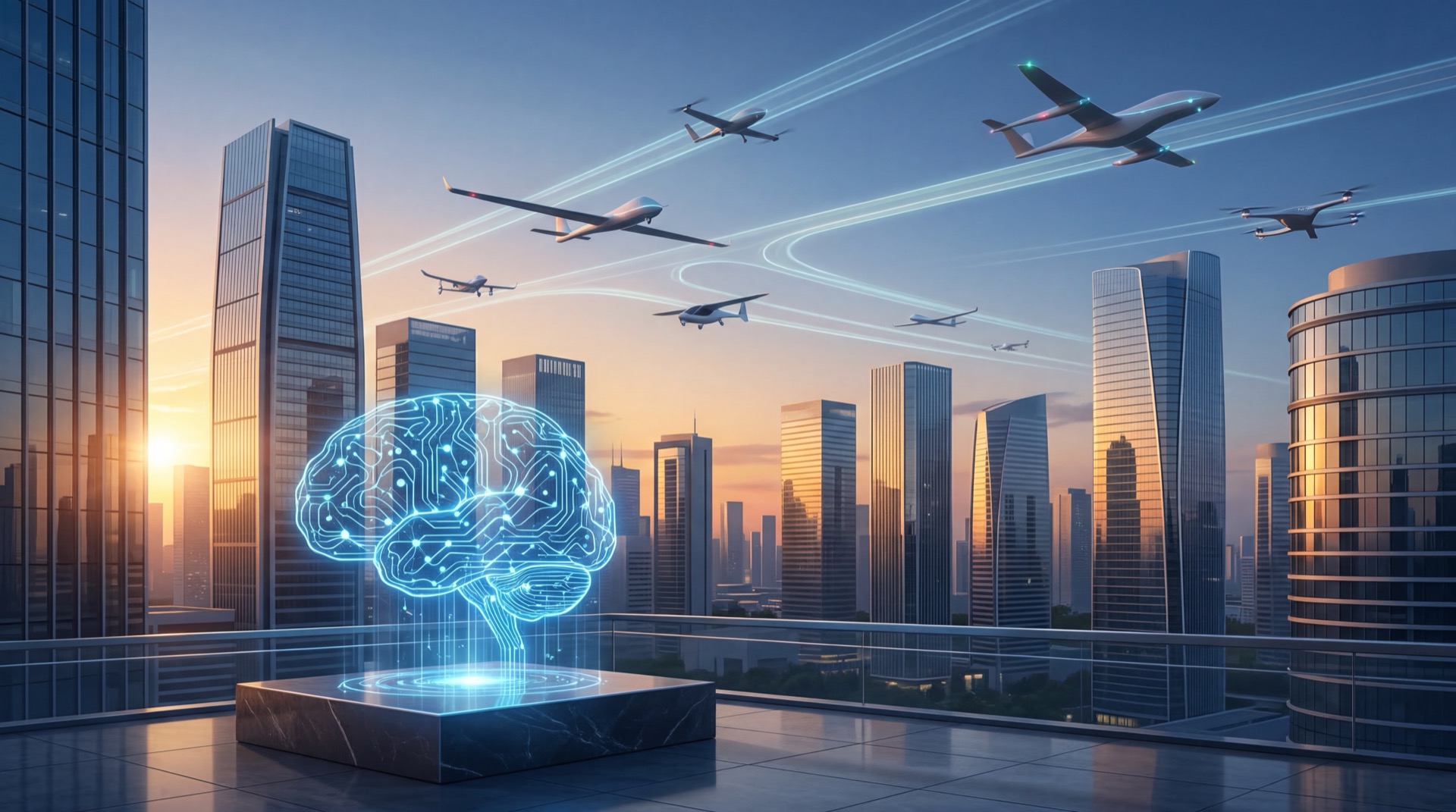
Putting the low‑altitude economy on the same legislative track ties AI to emerging drone logistics and urban air‑mobility scenarios. A national airspace management regulation would set baseline requirements for flight approval, safety responsibilities, and operational norms, while revisions to the Road Traffic Safety Law connect to the broader rollout of intelligent and connected transport.
What changed is that AI governance and low‑altitude sectors moved from policy discussion into a formal legislative research timetable for 2026. What happens next should be the release of draft laws, consultation windows, and the concrete outlines of the Airspace Management Regulations and Road Traffic Safety Law revisions—documents that will shape compliance for AI developers, drone operators, and smart‑mobility companies.
## Sources
– https://www.news.cn/politics/20260312/73fbd3df44c340fd8c0fcbfbd44470f7/c.html
– http://en.moj.gov.cn/2026-03/13/c_1168036.htm
– https://www.bjnews.com.cn/detail/1773303141129335.html
– https://www.caixinglobal.com/2026-03-13/tech-brief-march-13-china-plans-to-accelerate-ai-legislation-102422473.html
– http://www.news.cn/tech/20251215/071bdd29f56348f1ae3102b8507ff25e/c.html