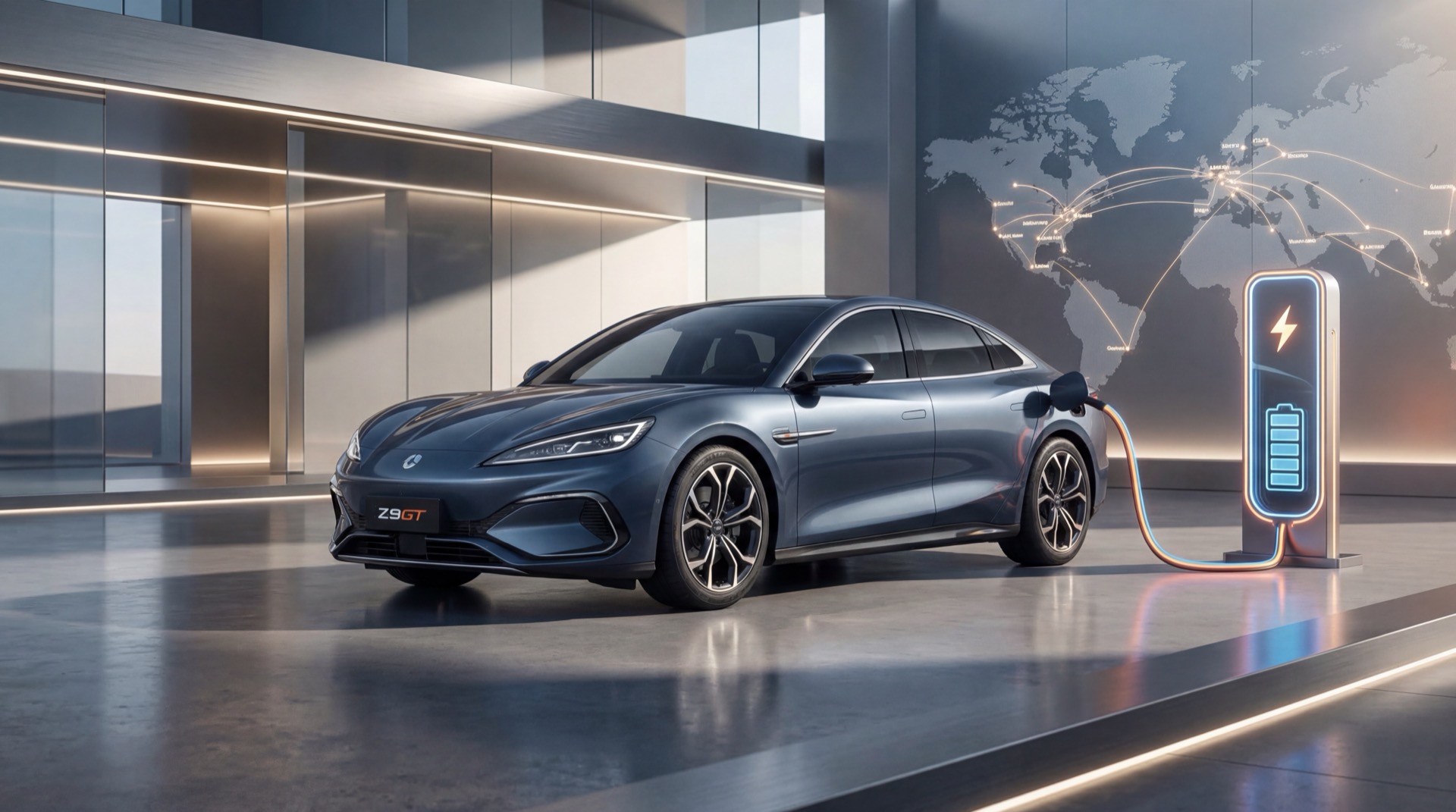
Denza, BYD’s premium brand, began deliveries of the Z9GT on March 13, 2026, the first production model delivered with BYD’s second‑generation Blade battery and flash‑charging system. Reports put the EV version’s CLTC range at up to 1,036 km, with charging from 10% to 70% in five minutes and 10% to 97% in nine minutes. The official price band is RMB 269,800 to 369,800. By pairing long range with ultra‑fast charging in a vehicle now entering customers’ hands, BYD is trying to set a new benchmark for China’s high‑end EV segment and show its battery supply chain can deliver both distance and charging speed at scale.
Why the delivery milestone matters
The Z9GT matters because it is not a lab demo or a concept reveal; it is a mass‑delivery product. That distinction is the critical step for any breakthrough claim in EVs, since range and charging specs only influence market behavior when a model is actually on the road. Denza has positioned the Z9GT as a premium GT‑style flagship, and delivery timing signals that BYD intends to put its newest battery platform into the hands of customers before the technology is widely licensed or rolled out across its mainstream lineup.
Pricing and PHEV context
Pricing and configuration details add context to the positioning. Reports from Chinese auto outlets indicate the Z9GT comes in both pure‑electric and plug‑in hybrid versions. The plug‑in hybrid model is listed with a 63.8 kWh battery, a 401 km pure‑electric range, and a combined range of 1,301 km. That split is important because it shows Denza is hedging across EV and PHEV demand while still anchoring the product story around battery capability. For premium buyers, the ability to choose between full EV and a long‑range PHEV variant can broaden the market without diluting the emphasis on performance and charging speed.
Second‑gen Blade battery plus flash charging
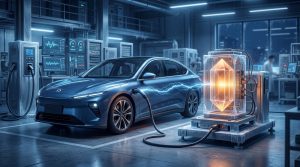
The key technical headline is the second‑generation Blade battery combined with flash charging. BYD’s first‑gen Blade battery helped the company scale LFP‑based packs at lower cost; the second‑gen version is now being positioned as a leap in both energy density and charging capability. Related signals, like BYD rolling Blade Battery 2.0 flash charging to its Ocean Network, show the company is moving this platform beyond a single model. While the outlets cited do not disclose chemistry specifics, they emphasize the charging curve: five minutes for 10% to 70% and nine minutes to 97% under normal temperatures. Those numbers, if sustained in real‑world conditions, would materially reduce the time cost of long‑distance driving for EVs, especially in China’s vast inter‑city travel corridors.
Range plus charging speed as a premium signal
Fast charging alone does not create a premium product, but it can reshape the ownership experience when paired with long range. A CLTC rating of 1,036 km is far above the typical flagship EV benchmark in China, and even allowing for the difference between CLTC and real‑world range, the headline figure positions Denza at the top of the market’s “range plus speed” narrative. That matters for high‑end buyers who are sensitive to both convenience and resale value, and it also matters for fleets and corporate customers who care about vehicle utilization and charging downtime.
Market scale and infrastructure readiness
The Z9GT’s launch also lands inside a rapidly expanding domestic market. Xinhua, citing the China Association of Automobile Manufacturers, reports that China sold 16.49 million new‑energy vehicles in 2025, with a penetration rate of 47.9% and domestic sales making up 50.8% of total volume. In a market that large, incremental improvements in charging speed and range can quickly become new competitive baselines. The infrastructure question is also moving in parallel, with broader debates on how flash charging and battery swaps might coexist in China’s EV refueling race. Premium models like the Z9GT are often used by automakers to establish the top end of those baselines before the technology trickles down to more affordable segments.
Supply‑chain signal and what changes next
For China’s supply chain narrative, this delivery milestone is also a statement. Denza is a BYD brand, and the second‑gen Blade battery and flash charging are BYD’s own technologies. That means a local automaker is not only building a premium vehicle, but also delivering a high‑profile battery architecture and charging solution that is designed and manufactured domestically. In the current global environment, where supply‑chain resiliency is increasingly linked to national strategy, each successful mass‑delivery of a new battery platform reinforces the idea that Chinese OEMs can define their own hardware and charging standards.
What changed is that BYD’s second‑gen Blade battery and flash charging have moved from an announcement into a delivered product, and a premium model now anchors those claims. The next questions are about scale and infrastructure: how quickly BYD and its partners can deploy charging stations that consistently support flash‑charging rates, how the real‑world range and charge curves compare with the headline CLTC figures, and whether premium customers will accept the pricing in meaningful volume. If those pieces line up, the Z9GT could signal a broader shift toward faster‑charging, longer‑range premium EVs in China’s domestic market rather than a one‑off showcase.
Sources
- ITHome — https://www.ithome.com/0/929/258.htm
- Sina Tech — https://finance.sina.com.cn/tech/digi/2026-03-15/doc-inhqzzfs6728942.shtml
- Yiche — https://news.yiche.com/xinchexiaoxi/20260315/15108296195.html
- Autohome (Chejiahao) — https://chejiahao.autohome.com.cn/info/25001032
- Xinhua (CAAM 2025 NEV data) — https://www.news.cn/20260114/751ac93c5125463cb86951ecbcb6b3e9/c.html