Zero One Auto Raises 12 Billion Yuan as Capital Races Into China’s New‑Energy Heavy‑Truck Market
China‑based new‑energy intelligent heavy‑truck startup Zero One Auto (Lingyi Auto, a literal translation of its Chinese name) said on March 12, 2026 that it has completed a new financing round of 12 billion yuan. The round was led by Puquan Capital, an investment platform under battery giant CATL, alongside autonomous‑driving company Momenta and NIO Capital, with multiple institutions joining as follow‑on investors. The raise comes roughly six months after the company’s reported 5 billion yuan Series A in mid‑2025, signaling that industrial and strategic capital is accelerating its exposure to smart heavy‑truck platforms and autonomous freight operations.
Deal snapshot and investor mix
The 12 billion yuan financing was disclosed by several Chinese outlets, with the investor list highlighting a blend of battery supply‑chain capital and autonomous‑driving technology players. Puquan Capital’s involvement ties the round to CATL’s broader strategy in electrified commercial vehicles, while Momenta and NIO Capital reflect growing interest from autonomous‑driving and EV ecosystems. Reports indicate Zero One Auto had raised 5 billion yuan in a Series A round in mid‑2025; taken together, the company’s disclosed fundraising in the last two rounds exceeds 17 billion yuan. That pace suggests an aggressive build‑out phase, likely focused on scaling vehicle production, expanding fleet deployment, and advancing end‑to‑end autonomous driving capabilities.
Product focus and deployment signals
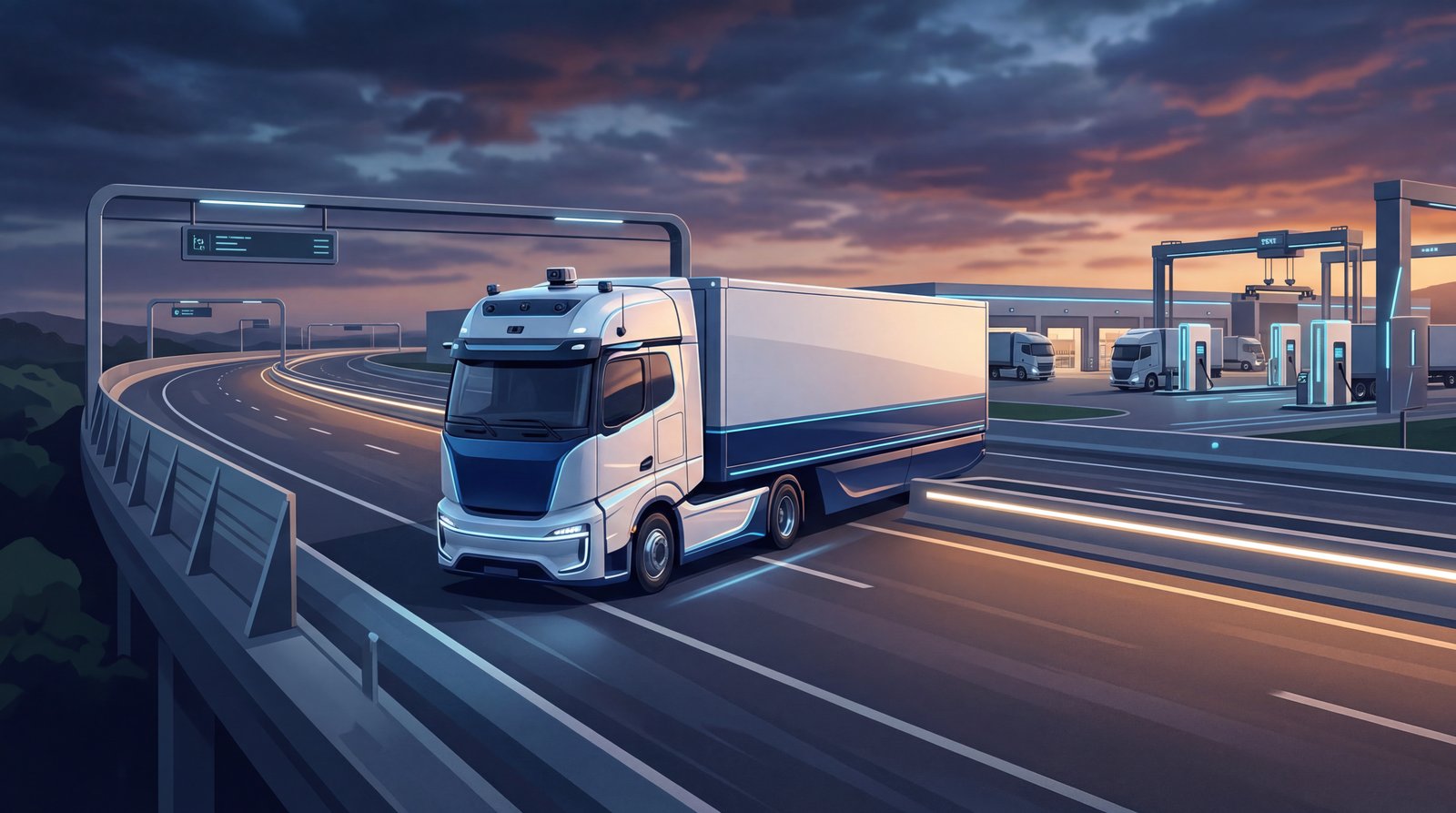
Zero One Auto focuses on native new‑energy heavy trucks paired with end‑to‑end autonomous driving, positioning itself at the intersection of electrification and automation in long‑haul freight. Public reports note that the company has introduced models called “Jingzhe” and “Xiaoman,” and has already moved beyond pilots into batch deliveries. According to industry coverage, cumulative deliveries are nearing 1,600 units, with a plan to start regular driverless operations in 2026 Q2 and a 2026 sales target of 5,000 units. Those figures matter because heavy‑truck commercialization depends on scale: large fleet deployments help validate reliability, charging economics, and total cost of ownership against diesel alternatives.
Strategic capital is betting on heavy‑truck electrification
The investor mix points to a strategic thesis rather than purely financial upside. CATL’s investment arm has reasons to push battery‑electric heavy trucks as a large‑capacity demand driver for next‑generation battery packs and charging networks. Momenta’s participation suggests an expectation that end‑to‑end autonomous driving can become a differentiator in freight efficiency and safety. NIO Capital’s presence adds another layer of EV ecosystem alignment. For a heavy‑truck startup, this kind of capital can accelerate supply‑chain integration, fleet partnerships, and downstream services such as maintenance, energy management, and fleet‑operations software. The wider EV investment backdrop is discussed in our piece on EV industry momentum amid oil market shocks.
Market context: China’s new‑energy heavy‑truck surge
Macro data reinforce why capital is stacking into the segment. Insurance‑based sales statistics cited by First Commercial Vehicle Network show China’s new‑energy heavy‑truck sales reached about 231,100 units in 2025, up 182% year‑on‑year. December alone reportedly saw 45,300 units sold, with a penetration rate of 53.89%. These numbers imply a structural transition rather than a temporary spike: electrified heavy trucks are moving into mainstream adoption, and scale economics are improving as volumes rise. For startups like Zero One Auto, this backdrop supports faster customer conversion as fleet operators weigh regulatory pressure, fuel cost volatility, and carbon‑reduction mandates. For a broader demand signal, see our coverage of China’s February auto retail and NEV penetration trends.
Execution challenges remain despite rapid fundraising
Large rounds do not eliminate the operational hurdles of heavy‑truck deployment. Battery‑electric heavy trucks must prove competitiveness on total cost of ownership, uptime, and charging infrastructure reliability. End‑to‑end autonomous driving adds another layer of complexity, especially in long‑haul or logistics corridors where safety validation and regulatory approvals are still evolving. Zero One Auto’s reported delivery numbers and 2026 targets indicate momentum, but scaling from thousands of units to sustained mass production requires consistent supply‑chain performance, robust after‑sales support, and strong fleet‑operator partnerships.
Competitive pressure and ecosystem positioning
The Chinese commercial‑vehicle market is crowded, and electrification is drawing both incumbents and startups. Zero One Auto’s positioning emphasizes “native” new‑energy platforms rather than retrofits, and pairs those platforms with autonomy. If it can deliver stable fleet economics and reliable driverless operations, it could carve out a defensible niche in long‑haul freight or dedicated logistics routes. The investor roster can also translate into strategic advantages—battery supply, autonomous‑driving stacks, and potential partnerships with OEMs or logistics players—but only if the company demonstrates repeatable deployments and a clear pathway to profitability.
What changed, and what could happen next
The immediate change is the scale and speed of financing: a 12 billion yuan round led by industrial and autonomous‑driving capital, following a 5 billion yuan Series A only half a year earlier. That fundraising cadence suggests a move from validation toward rapid commercialization. The next milestones to watch are concrete signals of driverless operations in 2026 Q2, progress toward the 5,000‑unit annual sales target, and whether the company can turn large‑scale deliveries into durable fleet economics. If it hits those benchmarks in a market where new‑energy heavy‑truck penetration is already above 50% in peak months, Zero One Auto could emerge as a meaningful platform player in China’s electric freight transition.
Sources
- 36Kr coverage: https://www.36kr.com/p/3717366669948297
- Xinhua Auto report: http://www.news.cn/auto/20260312/f18b018d51404dc5a8628bfbea755a96/c.html
- China Securities Journal: https://www.cnstock.com/commonDetail/649105
- Gasgoo report: https://i.gasgoo.com/news/70449902.html
- First Commercial Vehicle Network data (via Sohu): https://www.sohu.com/a/982731050_655634