Niu launches Lingxi AIOS and new NXT2/NX2 models, putting a large model into the cockpit
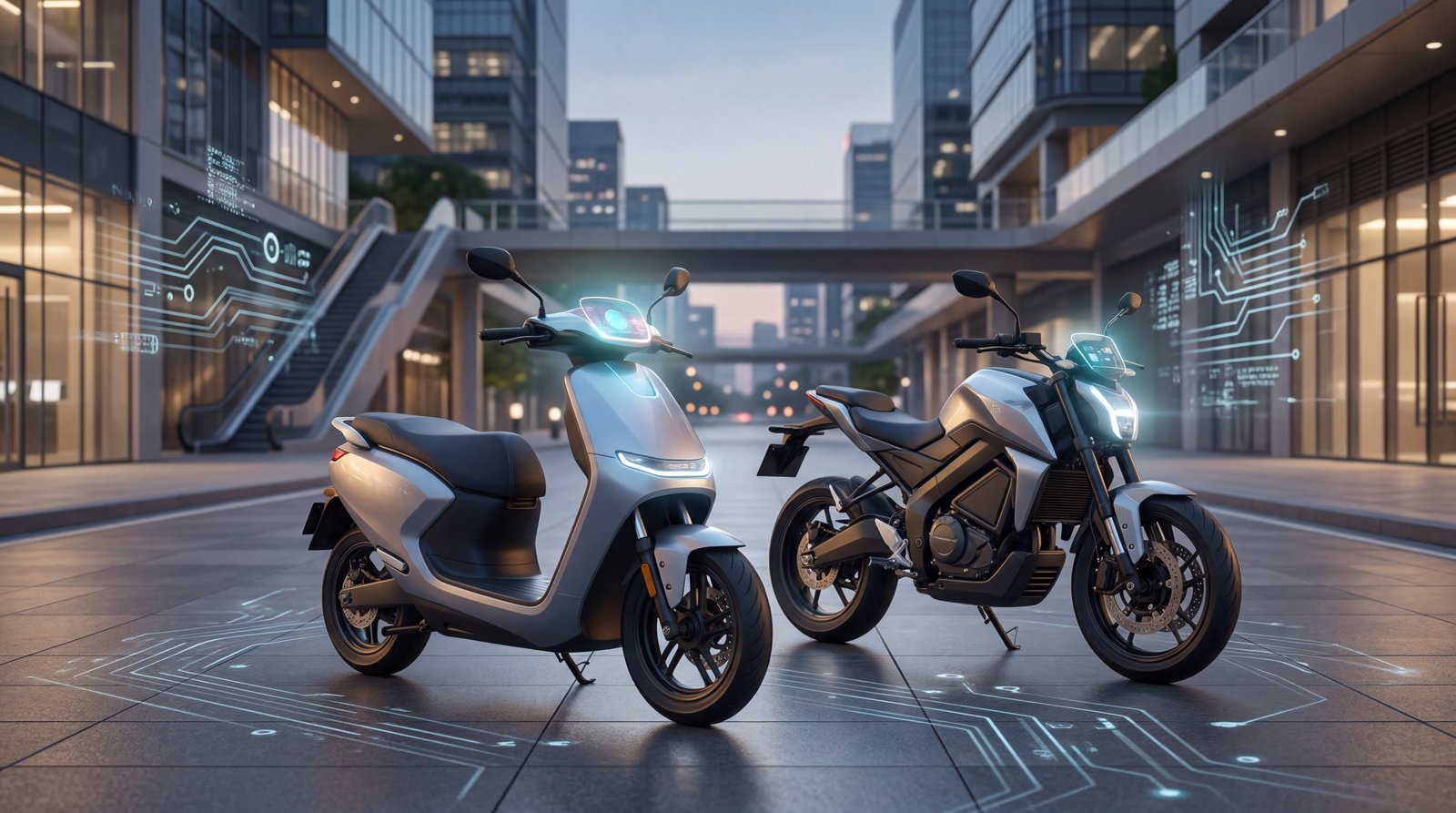
On March 17, 2026, Niu Technologies unveiled its Lingxi AIOS cockpit system and two new electric two-wheelers, the NXT2 and NX2, at a product strategy event in Beijing. The company says Lingxi AIOS is the first mass-produced two-wheel cockpit system built on the Qwen3.5 large model, and it paired the software launch with hardware aimed at both commuters and performance riders. NXT2 starts at RMB 5,299, with a higher-spec Ultra version at RMB 13,499, while the NX2 performance model is slated to go on sale in June. The announcements mark a push to move AI from phone-based companion apps into the vehicle itself.
Lingxi AIOS turns the two-wheel cockpit into an AI hub
Niu describes Lingxi AIOS as a “two-wheel intelligent ecosystem hub,” a framing that places the operating system at the center of the ride rather than as a peripheral feature. According to multiple tech outlets, the company’s key technical claim is the integration of Qwen3.5, Alibaba’s large model family that anchors Qwen’s broader foundation-model push, into a production two-wheel cockpit. That means the AI stack is not only in the companion app but embedded in the vehicle’s core system, which Niu says enables deeper context awareness and more natural interaction while riding.
The first user-facing feature is a voice assistant branded Xiaoniu Tongxue, now in beta. Media coverage notes that the assistant supports a “Hello, Niu” wake phrase, hands-free voice control, and more conversational query handling, with Niu promising over-the-air updates that expand scenarios after launch. In other words, the AI OS pitch is not about a single canned feature but about an evolving layer that can grow with new capabilities over time.
NXT2 for commuters, NX2 for performance riders
The hardware lineup is designed to map AI features onto different usage profiles. NXT2 targets urban commuters, and its pricing is aggressive for a national-standard e-bike segment: RMB 5,299 for the entry model and RMB 13,499 for the Ultra version, according to reports from multiple outlets. That spread suggests Niu is trying to use software and hardware differentiation to climb price bands without abandoning the mass-market base.
NX2, by contrast, is positioned as a higher-performance electric motorcycle-style product. While pricing for NX2 has not been widely published yet, the company has stated the model will be launched in June, and coverage highlights performance as a core theme alongside AI features. The staggered timeline indicates that Niu wants early attention on the AI OS while keeping a second hardware wave ready to sustain momentum.
Safety upgrades and the AI ecosystem strategy
Beyond voice and OS claims, Niu’s launch messaging also emphasized safety and a broader partner ecosystem. Media reports mention a driver-assist stack that combines vision and radar, described as L2-grade in design philosophy, alongside functions such as cornering ABS. Even if the exact feature availability varies by model or region, the intent is clear: Niu wants AI to be associated with safety systems and perception, not only convenience features.
The company also spotlighted partnerships with Qualcomm, Banma (the smart mobility unit jointly associated with Alibaba’s ecosystem), and HiSilicon. These are not just logo drops; they point to a strategy in which the OS layer and AI model integration are backed by mainstream chip and platform suppliers. For a two-wheel brand, that ecosystem framing helps reinforce the idea that AIOS is more than a proprietary UI skin and is instead a platform capable of scaling with hardware upgrades and third-party integrations.
China market context: demand scale and regulatory tailwinds
Niu’s announcement lands in a Chinese two-wheel market that remains massive and still growing. According to data cited by Xinhua from the China Bicycle Association, China produced 54.9 million electric bicycles in 2025, a 29% year-over-year increase. For January through November 2025, industry revenue rose 21.4% and profits climbed 42.2%, indicating that the sector is not only large but improving in profitability. Those numbers matter because they show why brands are willing to invest in higher-value features like AI and advanced safety systems.
This growth also occurs under a tightening regulatory regime: China’s national standards for electric bicycles have been pushing the market toward safer, more standardized hardware, while still leaving room for software and intelligence as differentiation layers. In that sense, an AI-centered cockpit is a way to create premium segmentation even as baseline hardware becomes more uniform.
Competitive implications for the two-wheel segment
Niu’s move follows a broader pattern in consumer electronics and mobility: brands are trying to embed large models directly into devices rather than relying on phone apps or cloud-only interfaces. That mirrors device-side AI moves like Qwen AI glasses at AWE 2026. For two-wheelers, that could shift the product narrative from “connected scooter” to “AI vehicle,” especially if voice control, navigation, safety alerts, and personalization improve in daily use. Niu’s claim of being first to ship a Qwen3.5-powered cockpit in mass production is a strong marketing line in China’s AI-heavy tech climate.
The company’s hardware strategy also hints at a premium ladder. By using AIOS as a shared base and then layering different hardware performance levels on top, Niu can push higher-margin models while still offering a lower-priced entry point. If the AI assistant and OTA upgrades deliver tangible value, Niu can keep riders engaged beyond the initial purchase, which opens doors for services or feature upgrades later on.
What changed and what might happen next
What changed is that a major Chinese two-wheel brand is shifting AI from a phone companion app into a native vehicle OS powered by a large model, while pairing that software leap with a fresh hardware lineup. What may happen next is a rapid race around in-vehicle AI for scooters and e-motorcycles: Niu’s June launch for NX2 will be the first signal of whether the AIOS story scales into the performance segment, and future OTA updates will show how quickly the assistant’s capabilities expand. If rivals respond with their own LLM-based cockpits, the two-wheel market could enter an AI feature cycle similar to smartphones, with software updates becoming a core part of vehicle differentiation.
Sources
- IT Home — “Niu launches the Lingxi AIOS AI cockpit system”
https://www.ithome.com/0/930/013.htm - MyDrivers (Kuai Technology) — “Niu releases two national-standard e-bikes with 5,299 RMB starting price”
https://news.mydrivers.com/1/1109/1109868.htm - PingWest — “Niu holds its 2026 product launch event and promotes AI-powered riding”
https://www.pingwest.com/w/312185 - Sina Finance — “Niu releases AI cockpit system and two new e-bikes”
https://finance.sina.com.cn/tech/roll/2026-03-17/doc-inhrikrn3782638.shtml - Xinhua / China Bicycle Association — “2025 electric bicycle production and industry growth data”
https://www.news.cn/tech/20260203/452729ebe2a545b18380d1044cfd85fb/c.html