Alibaba-backed HiClaw 1.0.4, outlined in a March 19 developer post and matching release notes, introduced the CoPaw Worker and said a multi-agent worker can run at roughly 150MB of memory, versus about 500MB for a default OpenClaw worker. On its face, that is a technical optimization. In context, it is a signal that China’s OpenClaw boom is moving into a new phase. The contest is no longer only about who can launch another agent interface or bundle a model with a workflow. It is increasingly about who can make teams of agents cheap enough to deploy, easy enough to connect, and reliable enough to supervise once they are doing real work.
That shift matters because the first wave of China’s OpenClaw frenzy exposed a gap between viral interest and operational reality. WIRED reported this month that many Chinese users were paying for cloud servers, API tokens, and installation help just to get OpenClaw running, while major domestic tech firms rushed to monetize the sudden demand. In other words, once agent adoption moved beyond screenshots and demos, the bottlenecks became practical: memory footprint, deployment friction, local execution, sync between components, and the cost of keeping multiple workers alive long enough to finish a task.
Alibaba’s HiClaw and CoPaw updates speak directly to that runtime problem. According to Alibaba’s March 19 developer write-up, CoPaw compresses the worker footprint to around one-fifth of a default OpenClaw worker and supports both Docker and local-host deployment paths. The related HiClaw release notes add more infrastructure detail, including bridge improvements, file sync, console support, runtime switching, and Matrix-based communication. Those are not glamorous features, but they address exactly the pain points that appear when a team wants to run more than one agent without treating every deployment as a mini DevOps project. Alibaba also framed the efficiency gain in practical terms, saying an 8GB machine could host more workers under the lighter setup.
The significance is not that Alibaba has built “another agent product.” China already has plenty of agent wrappers, branded assistants, and OpenClaw variants. The more interesting point is that a major Chinese cloud player is now treating multi-agent runtime economics as a first-order problem. That is a sign of market maturity. Once everyone can claim they have an agent, the next differentiator becomes whether that agent stack can run cheaply, connect cleanly to local or hosted environments, and stay usable outside a demo.
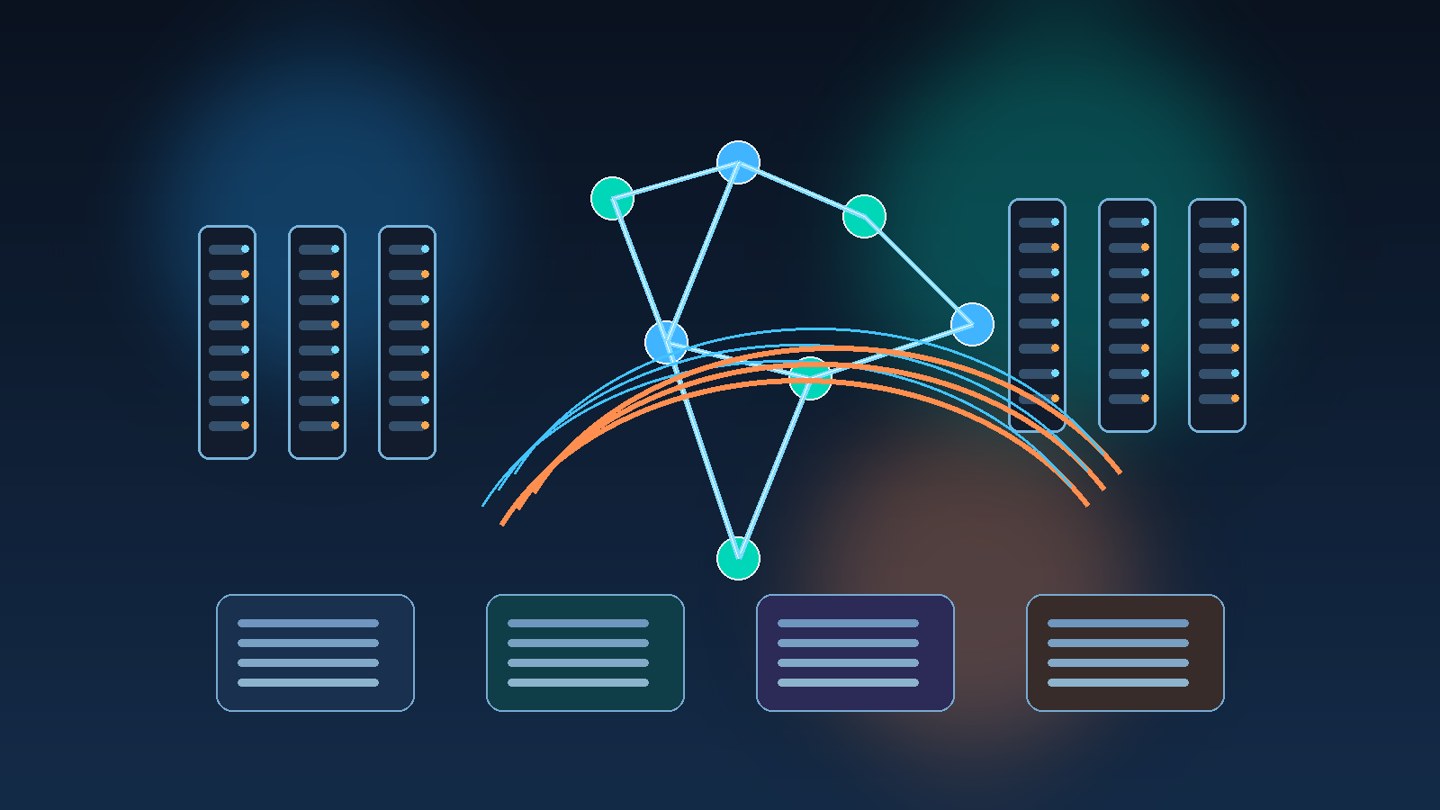
This is where OpenMOSS becomes more than a name-check. If CoPaw represents one answer to the runtime layer, OpenMOSS represents a builder-side answer to the orchestration layer sitting above it. Project materials describe OpenMOSS as a self-organizing multi-agent collaboration platform built around a clear division of roles: planner, executor, reviewer, and patrol. That structure matters because the hard part of multi-agent work is not only launching more workers. It is deciding who breaks down a task, who executes it, who checks the output, what happens when something fails, and how the system notices drift before bad work piles up.
Seen that way, HiClaw/CoPaw and OpenMOSS are addressing two different weaknesses in the same stack. CoPaw tries to make agent execution lighter and easier to deploy. OpenMOSS tries to make agent collaboration less chaotic and more accountable through review, scoring, rework loops, and patrol-style recovery. One is about lowering runtime pressure; the other is about raising organizational reliability. Together, they illustrate why the next stage of the agent race will be won below the headline layer. It is not enough for agents to exist. They have to be runnable as a group and governable as a group.
That framing also helps explain why this is a distinctly China story, not just a generic open-source trend. China’s OpenClaw rush has been unusually broad, spanning retail users, startup builders, cloud platforms, local governments, and major internet companies all at once. Bloomberg recently reported that Alibaba was creating enterprise tools to ride the country’s agent craze, while WIRED described how the mania was already driving spending on tokens, subscriptions, and infrastructure. In that environment, infrastructure questions surface faster. A market with intense competition and a large developer base will move quickly from “Can we launch an agent?” to “Can we operate many of them efficiently?”
OpenMOSS sharpens that point because it shows how Chinese builders are not only localizing OpenClaw adoption but also extending it into workflow management. The planner-executor-reviewer-patrol model is effectively an operating system for teamwork among agents. It turns the familiar failure modes of agent systems into explicit process steps: poor delegation, unchecked output, repeated mistakes, and unresolved blockers. That is useful not because it proves multi-agent systems are solved, but because it acknowledges that production-grade agent work needs supervision and recovery paths, not just more model calls.
There are still important caveats. The most eye-catching CoPaw numbers come from Alibaba’s own developer materials and release notes, so they should be treated as vendor claims rather than independent benchmarks. OpenMOSS, meanwhile, should be understood as an actively updated builder-side orchestration example documented through project materials, not as proof that every industry has already standardized on this model. Independent media coverage is strongest on the broader China OpenClaw boom, while the technical details on CoPaw and OpenMOSS still come mainly from official or project-side sources.
Even with those caveats, the broader signal is hard to miss. China’s agent competition is starting to split into a runtime race and an orchestration race. The runtime race asks how cheaply and simply a worker can be deployed, connected, and scaled. The orchestration race asks how a growing number of agents can be organized into something that resembles a dependable team rather than a pile of parallel processes. Alibaba’s CoPaw is trying to answer the first question. OpenMOSS is a credible attempt to answer the second.
That makes this moment more interesting than another story about app-level agent enthusiasm. The deeper battle is moving into the layer that international readers increasingly care about as well: not who has an agent, but who has the infrastructure to run a team of agents without letting cost, complexity, and quality control spiral out of hand.
Sources
Core sources:
– https://developer.aliyun.com/article/1717862
– https://github.com/alibaba/hiclaw/releases/tag/v1.0.4
– https://www.wired.com/story/china-is-going-all-in-on-openclaw/
– https://www.bloomberg.com/news/articles/2026-03-16/alibaba-creates-ai-tool-for-companies-to-ride-china-agent-craze
– https://github.com/uluckyXH/OpenMOSS
Word count (English body): 1033