Dek: Days after unveiling Blade Battery 2.0 and 1,500kW flash charging, BYD executive Li Yunfei says flash charging and battery swaps are not rival endgames but parallel ways to solve one EV problem: refueling time.
BYD’s latest EV message is no longer only about battery chemistry or eye-catching charging numbers. It is also about who gets to define the next stage of convenience in China’s electric-car market.
On March 8, Li Yunfei, general manager of branding and public relations at BYD Group, said flash charging and battery swaps are both valid approaches and should be seen as different paths toward the same goal. According to same-day local coverage, Li was responding to a question about whether BYD’s recent flash-charging push would trigger a wider showdown between ultra-fast charging and battery swapping as competing infrastructure models.
His answer was notably measured. Rather than dismiss battery swapping, Li said both approaches are “good,” described the market as one where “a hundred flowers bloom,” and argued that both routes ultimately aim at the same outcome: making it easier for drivers to move from gasoline cars to EVs.
That matters because it came only days after BYD’s March 5 rollout of Blade Battery 2.0 and 1,500kW flash charging. In other words, this is not a neutral academic comment about charging philosophy. It is BYD trying to shape how the market interprets its newest technology push.
What BYD actually said
The core of Li’s statement was straightforward. According to Sina Tech and MyDrivers, he said battery swapping and flash charging may look like different routes, but they are both trying to solve the same consumer pain point: the sense that refueling an EV still takes too long.
That distinction is important. Li did not frame battery swapping as obsolete, and he did not say flash charging had already won. Instead, he presented both as different engineering answers to the same adoption problem. Battery swapping, in his telling, addresses the complaint that charging is too slow by replacing the battery altogether. BYD’s flash-charging approach tries to answer the same complaint by making charging itself dramatically faster.
For editorial purposes, that is the cleanest way to interpret the comment. BYD is not announcing a truce because there was never a formal two-company war to end. What it is doing is publicly reframing the debate so that its own charging strategy looks like one serious route within a broader transition story, not merely one more spec sheet battle.
Why the timing matters after BYD’s March 5 launch
The March 8 comments would have landed differently if they had come in isolation. They did not.
On March 5, BYD unveiled Blade Battery 2.0 and its new flash-charging stack. In BYD’s official release, the company said the system can take a battery from 10% to 70% in five minutes and from 10% to 97% in nine minutes, with a single-connector peak charging power of 1,500kW under its China-market setup. BYD also said it had already installed 4,239 flash-charging stations across China as of March 5 and was targeting 20,000 in operation by the end of 2026.
Those claims were already enough to make BYD’s launch a major EV-infrastructure story. But Li’s March 8 remarks add a second layer. They show BYD is not only promoting hardware. It is also trying to define the meaning of that hardware.
The company appears to understand that charging-speed claims alone do not settle the market narrative. A fast-charging system still has to compete against the argument that swapping can remove waiting more completely, at least in some use cases. By saying both paths can coexist, BYD avoids turning the conversation into a simplistic either-or contest while still defending the relevance of its own route.
This is really a fight over how China’s EV market defines convenience
For readers outside China, the most interesting part of this story is not the quote itself. It is what the quote reveals about where competition is heading.
China’s EV leaders are no longer competing only on vehicle launches, range claims, or price cuts. They are increasingly competing over the refueling model: how drivers replenish energy, how long it takes, what kind of infrastructure is needed, and which approach feels most practical at scale.
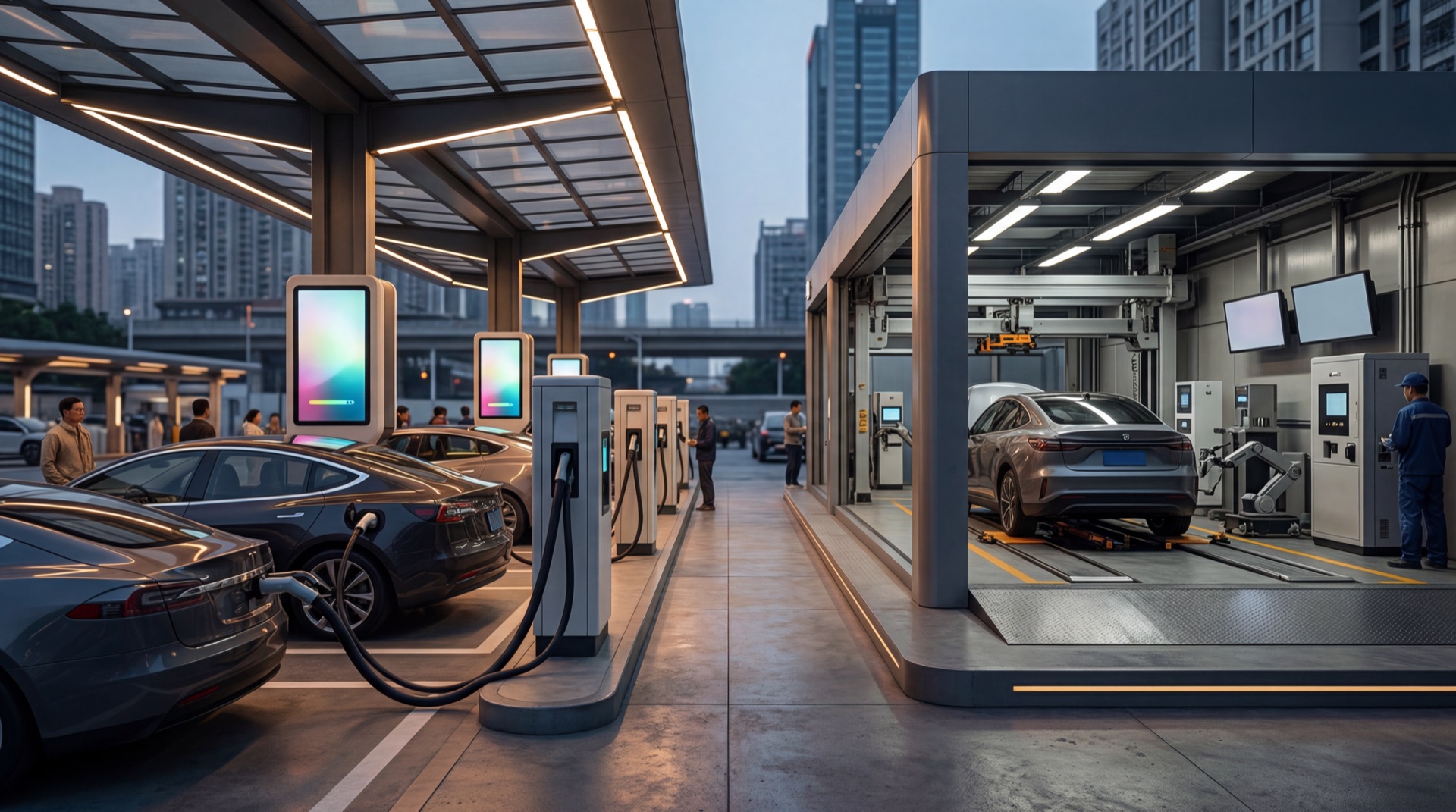
Battery swapping, a model most closely associated in China with players such as NIO, tries to make the stop feel closer to a pit stop by replacing the pack rather than waiting for it to recharge. Flash charging, by contrast, keeps the charging model intact but tries to compress the waiting time until it feels much closer to a fuel stop.
Li’s framing matters because it keeps both of those routes inside the same strategic umbrella. His message is not that the market must choose one ideology. It is that any solution that reduces the inconvenience of refueling can help speed EV adoption.
That is a smart position for BYD to take. It allows the company to sell ultra-fast charging as a serious answer to the same consumer problem that battery swapping targets, without overcommitting to the claim that one architecture has already ended the debate.
Why this angle is more useful than another battery-spec recap
BYD’s March 5 launch has already been widely reported as a charging-speed story. The March 8 comment is more interesting because it turns that product launch into a market-positioning story.
The bigger question is no longer just whether BYD’s latest battery and charger can hit the numbers demonstrated at launch. The more durable question is whether Chinese EV makers are entering a phase where infrastructure narratives matter almost as much as the cars themselves.
That broader pattern is already visible in BYD Launches Blade Battery 2.0 With 1,500kW Flash Charging, which focused on the technical announcement itself, and in BYD Unveils New Blade Battery and 20,000-Station Flash-Charge Push, which highlighted the network side of the strategy. It also connects with XPeng Launches G6 EREV in China as BEV-First Brands Embrace Dual-Powertrain Strategy, where the competitive story was less about one pure technology line than about how Chinese carmakers mix multiple solutions to make EV ownership more practical.
Seen in that context, Li’s remarks are part of a larger shift. Chinese carmakers are not only launching technologies. They are also trying to shape the language through which consumers and investors understand the transition away from gasoline.
What not to overstate
This is exactly the kind of story that gets weaker when the verbs become too strong.
Li’s March 8 remarks do not mean BYD has launched a battery-swap network, endorsed a standard swap platform, or declared the infrastructure debate finished. Nothing in the available source material supports any of those conclusions.
The sources also do not prove that flash charging and battery swapping will be equally viable in every market or every use case. Land use, grid constraints, standardization, vehicle design, station economics, and driver habits will all help determine which models scale best and where.
The same caution applies to BYD’s charging figures. The five-minute and nine-minute performance claims come from BYD’s earlier product release and launch-stage reporting. They are meaningful as company claims and important industry signals, but they should not be rewritten as universally verified real-world outcomes across all conditions.
So the disciplined version of the story is also the strongest one: BYD says flash charging and battery swapping can coexist, and it is making that argument just after unveiling a major fast-charging push of its own.
Bottom line
BYD’s March 8 message matters because it shows the company is trying to do more than market a faster battery. It is trying to shape the terms of China’s EV refueling debate.
By describing flash charging and battery swapping as different roads to the same destination, BYD is positioning its own technology as part of a wider consumer-convenience mission rather than a narrow hardware contest. That does not settle the argument over which infrastructure model will dominate. But it does show that China’s EV leaders are now fighting not only over products, but over how the future of refueling itself should be understood.
Sources
- Sina Tech: https://tech.sina.cn/2026-03-08/detail-inhqfsut4614357.d.html
- MyDrivers: https://news.mydrivers.com/1/1107/1107718.htm
- BYD official international release on Blade Battery 2.0 and flash charging: https://bydukmedia.com/en/news-articles/byd-breaks-down-final-barriers-to-electrification-with-blade-battery-2.0-and-flash-charging.html