The electric vehicle landscape is experiencing a dramatic realignment in March 2026, with automakers making starkly different strategic bets on their EV futures. While some manufacturers are doubling down with aggressive product launches and pricing, others are pulling back entirely from key market segments.
Key Takeaways
- Rivian unveiled its complete R2 lineup starting at $57,990, directly targeting Tesla’s dominant Model Y with a cheaper rear-wheel-drive variant coming later at $45,000
- Honda shocked the industry by canceling three planned EVs for the US market in 2026, including the highly anticipated Acura RSX electric sedan
- Volkswagen refreshed its ID.3 with the new “Neo” variant and upgraded software across its EV lineup, signaling continued European market commitment
- Tesla expanded beyond vehicles entirely, securing a UK electricity supply license to compete with traditional utilities
Rivian’s Bold Tesla Challenge: R2 Pricing Strategy Revealed
Rivian’s most significant move comes with the full reveal of its R2 midsize SUV lineup, positioning the vehicle as a direct Tesla Model Y competitor. The Performance Launch model will arrive this spring at $57,990, placing it squarely in premium EV territory while undercutting Tesla’s current pricing structure.
The real disruption, however, lies in Rivian’s promise of a rear-wheel-drive variant starting at $45,000 — a price point that could fundamentally alter the midsize electric SUV market. This strategic pricing suggests Rivian is prioritizing market share over immediate profitability, betting that volume sales will drive down production costs and establish the brand as a legitimate Tesla alternative.
| Vehicle | Starting Price | Drive Type | Availability |
|---|---|---|---|
| Rivian R2 Performance Launch | $57,990 | AWD | Spring 2026 |
| Rivian R2 RWD | $45,000 | RWD | Later 2026 |
| Tesla Model Y | ~$52,000 | RWD | Available now |
Honda’s Strategic Retreat Signals Industry Reality Check
In stark contrast to Rivian’s aggressive expansion, Honda has made the surprising decision to cancel three planned EVs for the US market in 2026, including the Acura RSX electric sedan that was positioned as a luxury EV flagship. This retreat represents more than just product delays — it signals a fundamental reassessment of EV market readiness and consumer demand patterns.
Honda’s pullback is particularly significant given the company’s previous commitments to electrification. The canceled vehicles were intended to establish Honda as a serious EV contender in the American market, competing directly with established players like Tesla and emerging challengers like Rivian.
This decision likely reflects Honda’s internal analysis showing that current EV adoption rates and charging infrastructure development haven’t met the aggressive projections that justified these product investments. The move suggests Honda is choosing to focus resources on fewer, more strategically positioned EVs rather than spreading development costs across multiple platforms.
Volkswagen Stays the Course with ID.3 Neo Refresh
While Honda retreats and Rivian advances, Volkswagen is taking a measured approach with its ID.3 Neo refresh and updated software across its EV lineup. The German automaker’s strategy centers on incremental improvements rather than revolutionary changes, updating the popular ID.3 hatchback with enhanced infotainment systems that will also be available across the ID.4 and other Volkswagen EVs.
This software-first approach reflects Volkswagen’s recognition that modern EV competitiveness increasingly depends on digital experience rather than just hardware specifications. The updated infotainment system represents Volkswagen’s attempt to address one of the most common criticisms of its current EV lineup — user interface complexity and responsiveness issues.
Tesla’s Energy Expansion: Beyond Vehicle Manufacturing
Perhaps the most strategically significant development comes from Tesla Energy Ventures securing a UK electricity supply license from Ofgem. This marks Tesla’s transition from an automotive company that happens to make batteries into a full-spectrum energy provider capable of competing with traditional utilities.
The six-year journey to secure this license demonstrates Tesla’s long-term vision of vertical integration across the entire energy ecosystem — from solar generation and battery storage to direct electricity supply. This move positions Tesla to capture value across multiple touchpoints in the clean energy transition, potentially creating new revenue streams that extend far beyond vehicle sales.
What This Means for the EV Market
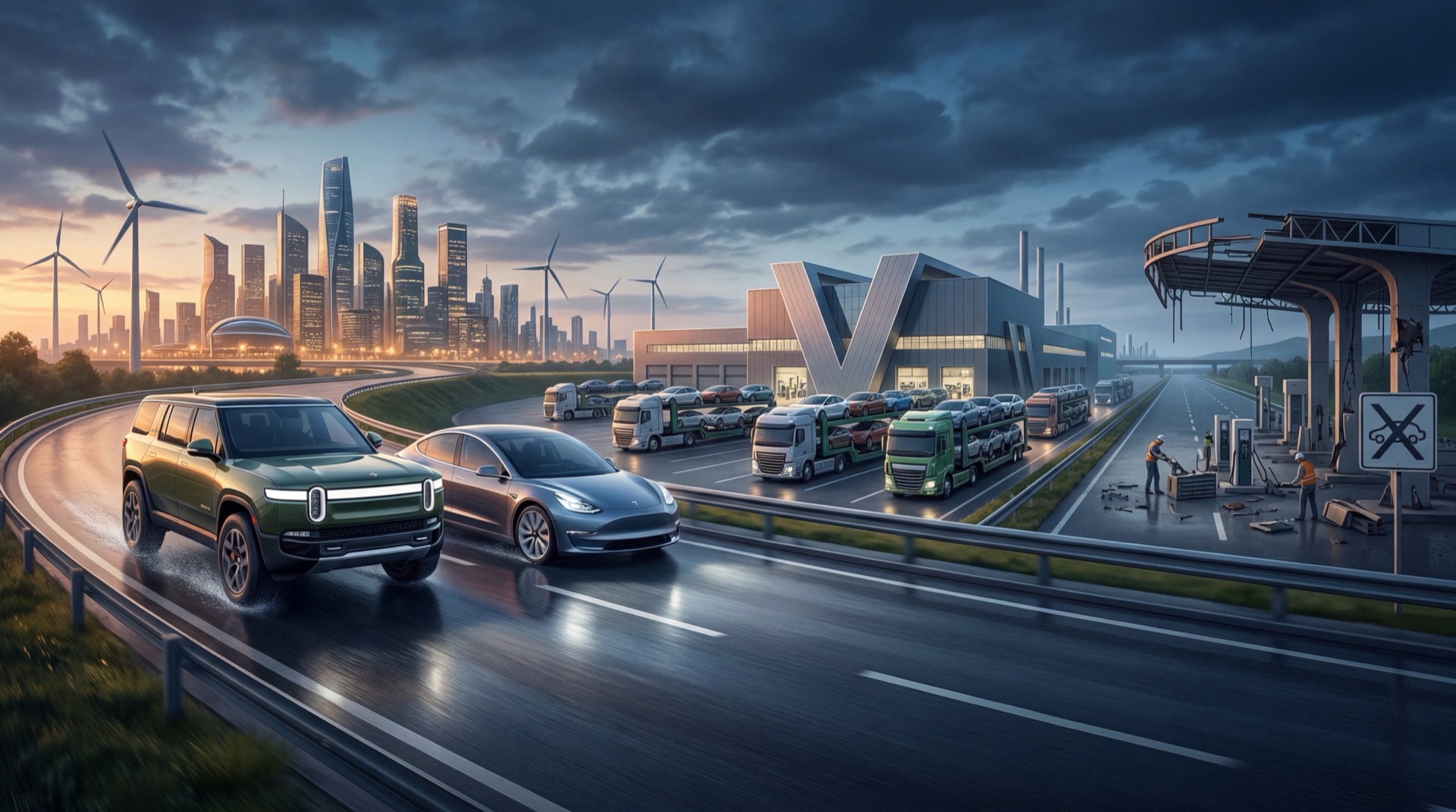
These divergent strategies reveal an industry at an inflection point. Aggressive players like Rivian are betting that bold pricing and feature positioning can disrupt established market leaders, while traditional automakers like Honda are reassessing the pace of EV transition based on real-world adoption data.
The success or failure of these contrasting approaches will likely determine which business models prove sustainable as the EV market matures. Rivian’s direct Tesla challenge, Honda’s strategic retreat, and Tesla’s energy expansion each represent different theories about where the electric mobility industry is heading — and which companies will ultimately capture the most value in the transition to electrification.