XPeng on March 6 launched an extended-range version of its G6 coupe SUV in China, pricing the model from RMB 186,800 and using the release to make a broader strategic point: even brands built around battery-electric vehicles now see range extenders as too important to ignore in the country’s brutal EV market.
That is what makes the G6 EREV more than another new-car announcement. According to launch coverage from CnEVPost and CarNewsChina, the model combines a 430 km CLTC pure-electric range with a 1,704 km CLTC combined range, while also leaning on 800V architecture, 5C charging, and higher-end AI driving hardware to preserve XPeng’s tech-forward identity.
The cleanest way to read this launch is not that XPeng is abandoning BEVs. It is that the company is now pushing a dual-powertrain strategy in a market where consumers increasingly value both charging convenience and range flexibility.
XPeng is expanding beyond a pure-BEV story
For years, XPeng was most closely associated with a software-heavy battery-electric narrative: smart cockpits, advanced driver-assistance features, and a premium around intelligent driving rather than traditional hybrid packaging.
The G6 EREV suggests that positioning alone is no longer enough. In China’s current market, range-extended and hybrid-style models have become too commercially important for even BEV-first startups to dismiss. XPeng is responding by widening its powertrain playbook without dropping the product language that helped define its brand.
That makes this a useful industry signal. China EV competition is no longer just about who can offer a longer pure-electric range or a lower sticker price. It is increasingly about who can combine multiple powertrain options with compelling software, charging, and cabin technology.
The headline specs are built for a broader market pitch
XPeng’s launch-day numbers are straightforward and easy to understand, which helps explain why the story traveled quickly beyond specialist auto media.
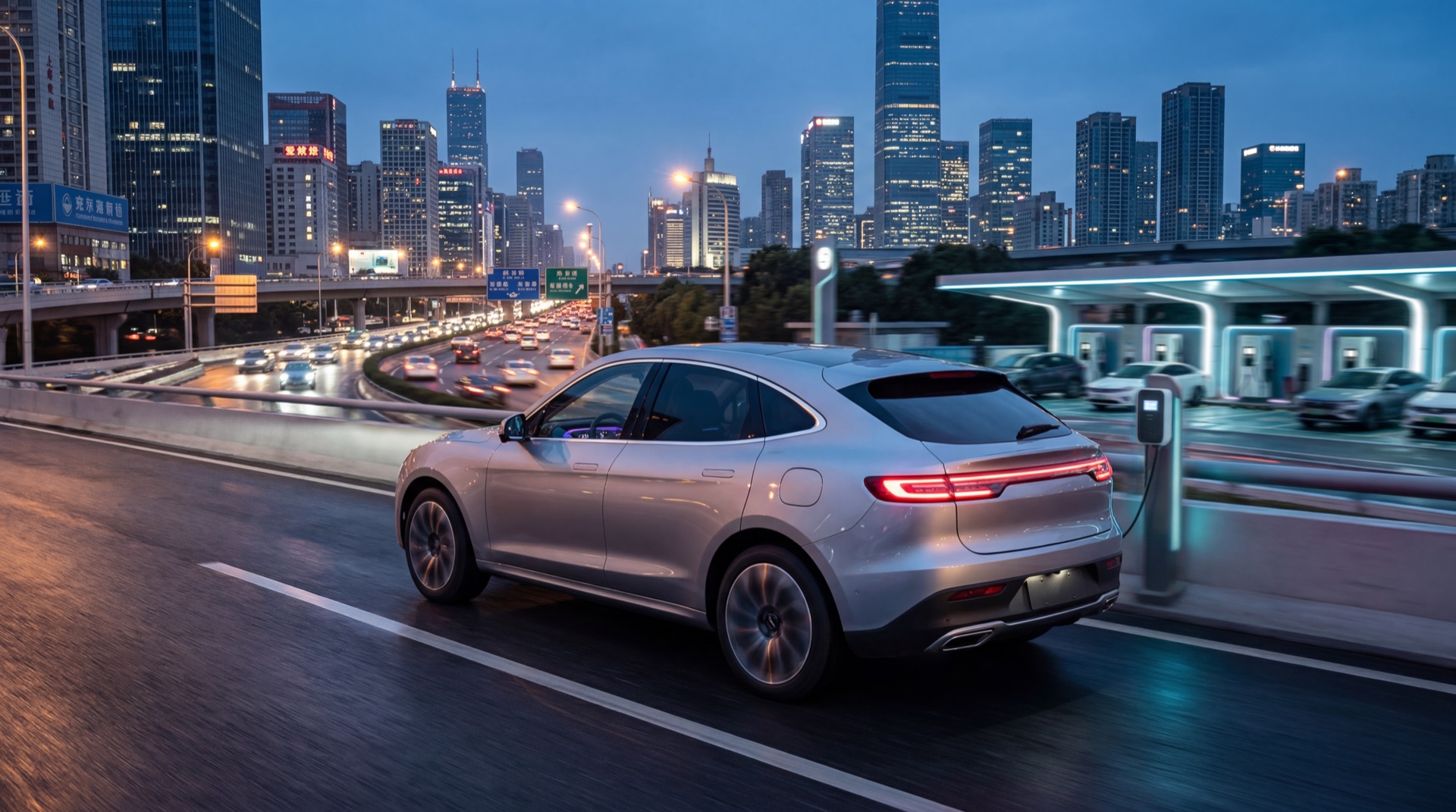
According to CnEVPost and CarNewsChina, the G6 EREV starts at RMB 186,800, uses a 1.5T range extender with a 55.8 kWh battery pack, and delivers 430 km of CLTC pure-electric range plus 1,704 km of CLTC combined range. The same reports say the model is built on an 800V high-voltage platform with 5C charging support and can add 314 km of range in 12 minutes under XPeng’s stated test conditions.
Those numbers matter because they show how XPeng wants the vehicle to be perceived. This is not being framed as a compromise product for drivers who could not accept a BEV. It is being framed as a long-range SUV that keeps fast-charging and software credentials at the center of the pitch. That charging-led positioning fits neatly alongside BYD’s latest flash-charging push and its wider infrastructure buildout, both of which show how speed and convenience are becoming major EV selling points in China.
That distinction is important for international readers. The 430 km and 1,704 km figures are CLTC figures, not EPA or WLTP estimates, and the 314 km in 12 minutes charging figure should be treated as a company claim carried by launch coverage rather than a universal real-world outcome. But even with those boundaries in place, the launch message is clear: XPeng wants to compete on convenience and technology at the same time.
XPeng is still trying to differentiate through AI and software
What separates the G6 EREV from a plain range-extender story is the layer XPeng has built on top of the powertrain.
CnEVPost and CarNewsChina both reported that XPeng tied the model to its second-generation VLA, or Vision-Language-Action, stack and to in-house autonomous-driving chips delivering up to 2,250 TOPS of computing power. In other words, XPeng is not presenting the G6 EREV as a retreat from its software narrative. It is presenting the car as proof that it can add a hybrid-style range solution without surrendering its AI positioning.
That matters in a crowded Chinese market where product features are converging fast. Once pricing pressure intensifies and range claims begin to blur together, automakers need another way to justify a premium. XPeng’s answer is to pair powertrain flexibility with a software-defined edge — a theme that also appeared in our earlier look at how the G6 used VLA positioning to reach a mass-market segment.
Still, that edge should be described carefully. The VLA and 2,250 TOPS references are part of XPeng’s launch positioning, not proof of hands-free or fully autonomous deployment. The smarter framing is that XPeng is trying to use AI-driving capability as a differentiator inside a more competitive EREV segment.
Why this launch matters beyond one SUV
The broader takeaway is that China’s EV war is becoming less ideological and more pragmatic.
A few years ago, it was easier to sort brands into cleaner categories: BEV specialists on one side, hybrid and range-extended players on the other. That line is getting harder to defend. As the market matures, the winning formula may depend less on sticking to a single propulsion identity and more on giving buyers a wider mix of use-case flexibility, charging speed, software features, and perceived intelligence.
XPeng’s G6 EREV fits that shift neatly. It lets the company participate more directly in China’s extended-range boom while still arguing that it can offer premium charging architecture and higher-end AI features. For XPeng, the point is not simply to sell another SUV. It is to show that a BEV-native brand can widen its addressable market without looking technologically conservative.
That is also why the G6 EREV should not be misread as a global launch story or as evidence that XPeng has solved autonomous driving. The launch says something narrower, but still meaningful: China’s EV competition is moving toward powertrain flexibility plus software differentiation, and XPeng wants to be credible on both.
Bottom line
XPeng’s March 6 G6 EREV launch is best understood as a strategy signal disguised as a product launch. The company is entering the range-extended lane more aggressively, but it is doing so in a way that still emphasizes 800V charging, AI-driving hardware, and a higher-tech brand identity.
In that sense, the G6 EREV is a snapshot of where China’s EV market is heading. Even BEV-first brands are learning that the next phase of competition may not be pure electric versus hybrid. It may be about who can combine powertrain choice, charging speed, and software intelligence most convincingly.