China has spent the past year talking about “AI+” as a national growth engine. What makes Jiangsu’s latest move worth watching is that it gives that slogan a more concrete industrial shape.
Reuters reported on March 7 that officials in Jiangsu, one of China’s most important manufacturing provinces, highlighted plans to expand AI infrastructure and upgrade industry after Xi Jinping urged the province earlier in the week to lead technology-driven growth. That alone would make it a notable policy story. But the more interesting point is that Jiangsu is not presenting AI as a distant research ambition. It is framing AI as factory equipment, logistics software, industrial models, and regional computing capacity.
That is why this story matters beyond provincial politics. Jiangsu is a major node in China’s electronics, machinery, auto-parts, and export economy. If a province of that scale is making AI deployment part of its industrial playbook, the implications go well beyond local messaging.
A province with scale, and numbers to back it up
The Reuters report gives the story a hard statistical backbone. According to the outlet, Jiangsu has more than 1,500 AI companies, ranks second nationwide in computing capacity, and already counts 66 large AI models and 283 registered algorithms.
Those figures matter because they move the discussion away from vague enthusiasm. Jiangsu is not describing a future AI ecosystem from scratch. It is describing an already sizable regional base that can now be pushed toward wider deployment.
Reuters also reported that the province plans around 50 AI transport pilot applications. That detail is important because it broadens the frame from model development to infrastructure and logistics management. In other words, the province is not only talking about AI in software terms. It is talking about AI as an operational layer for roads, transport systems, and industrial services.
From policy language to factory upgrades
The strongest reason this topic fits an international tech site is that the manufacturing angle is unusually concrete.
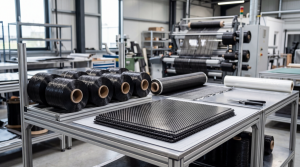
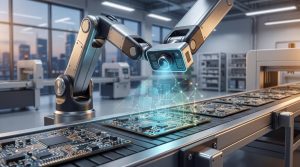
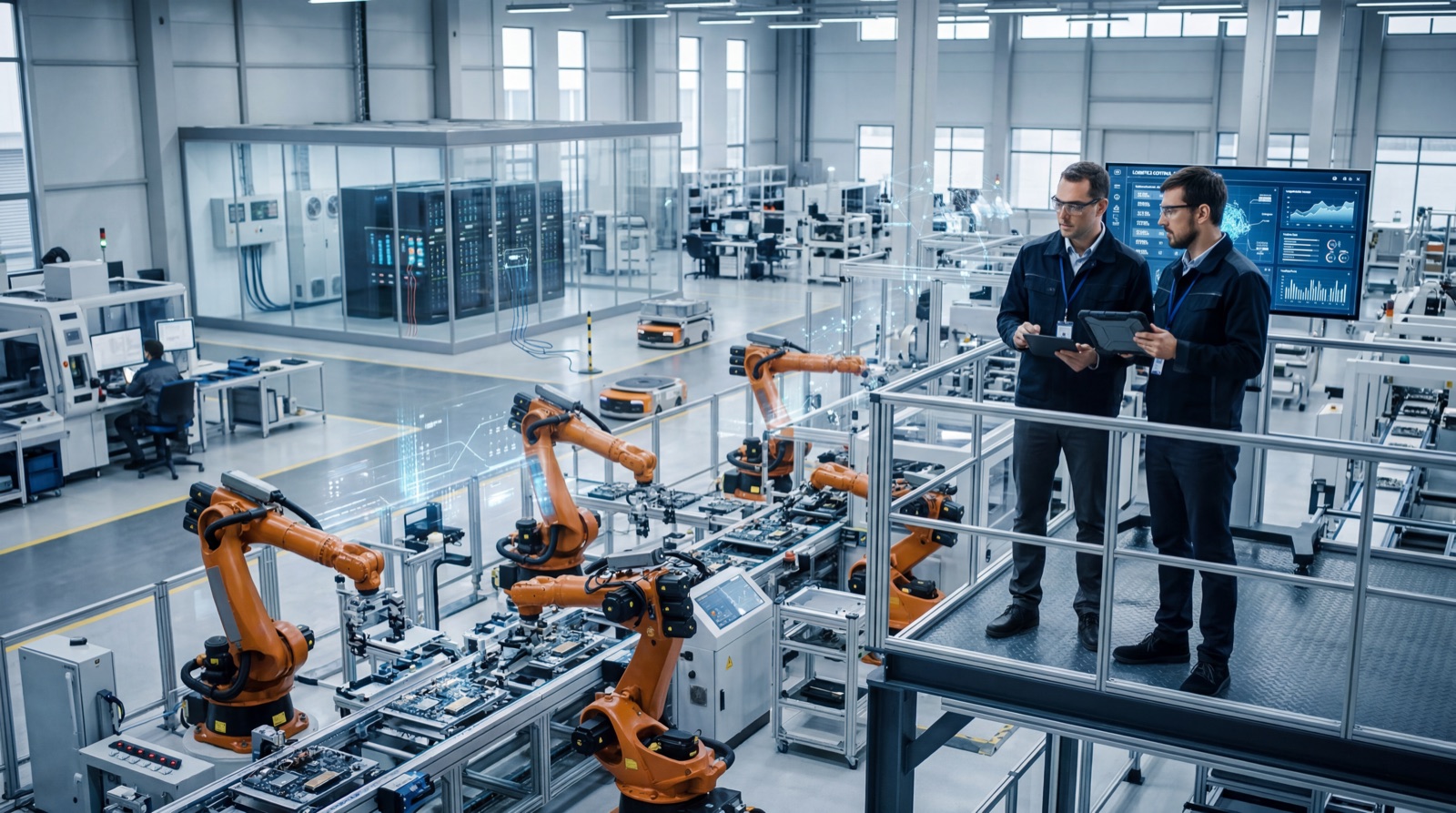
Reuters said Yangzhou alone has already built 186 smart production lines in sectors including auto parts. That gives the Jiangsu push a real factory-floor anchor. It suggests the province is trying to fold AI into industrial modernization where output, efficiency, and supply-chain coordination matter more than headline-grabbing chatbot demos.
Official provincial reporting adds another layer. A March 7 report from Jiangsu party media said the province’s industrial technology system will rely on innovation centers co-built with more than 700 leading enterprises, and that it plans to form “AI+” industry consortia to connect technology suppliers with industrial demand.
That is a notable framing choice. It implies Jiangsu sees AI adoption as an ecosystem problem, not just a software procurement decision. The province is trying to build channels between research, infrastructure, and enterprise deployment so that manufacturers can actually absorb AI tools instead of treating them as disconnected pilots. It also fits alongside Huawei’s AI data-platform push, which shows how enterprise AI is being framed around infrastructure, retrieval, memory, and deployment rather than just model hype.
Local targets show what execution could look like
People.cn’s Jiangsu coverage helps explain how this province-wide push may translate into city-level execution.
One March 7 report focused on Nantong, where a local action plan aims to reach 30,000 PFLOPS of intelligent computing capacity by 2027 and cultivate 30 industrial vertical models. The same report said the city wants AI adoption to exceed 70% among key enterprises, while broader digital manufacturing metrics are also being pushed higher.
Those are still targets, not completed province-wide outcomes, and they should be read that way. But they help clarify what Jiangsu’s “AI+” campaign is supposed to mean in practice: more compute, more sector-specific models, and wider adoption inside industrial companies rather than AI staying concentrated in labs or cloud demos.
The People.cn report also cited examples where AI-linked systems improved efficiency by about 30% in specific manufacturing settings. Even if such case studies should be treated carefully and not generalized too broadly, they show the narrative Jiangsu wants to build: AI as an efficiency tool embedded in production, not just as a symbolic technology priority. The province-scale buildout also echoes other recent infrastructure and deployment stories, including Baidu’s AI infrastructure project with China Unicom’s Shandong arm and Westwell’s industrial AI and logistics push.
Why global readers should care
This is still a China policy-and-industry story, but it has a broader hook.
For global readers, Jiangsu offers a useful window into how Beijing wants AI policy to scale inside manufacturing-heavy regions. The province’s role in electronics, machinery, and auto-related supply chains means its AI buildout is relevant to anyone tracking industrial competitiveness, export capacity, or the next phase of factory automation.
It also shows that China’s AI strategy is not only about frontier model races or consumer-facing assistants. Another part of the playbook is more pragmatic: compute infrastructure, industrial pilots, vertical models, and local government targets designed to pull AI into the physical economy.
That does not mean Jiangsu represents all of China, and it does not mean the rollout is already complete. But it does provide one of the clearest recent examples of how a major province is trying to turn top-level political direction into measurable industrial action.
The bottom line
Jiangsu’s latest AI push is best understood as a province-scale case study in industrial deployment. The story is not simply that Xi urged the province to lead. The more meaningful development is that Jiangsu used the March 7 news cycle to show how it plans to respond: with more computing capacity, more AI transport pilots, more industrial coordination, and more factory upgrades.
For an English-language tech audience, that makes Jiangsu more than a local policy headline. It is a practical snapshot of how China wants AI to move from national strategy documents into infrastructure, logistics systems, and production lines.