Chery sets March 18 Battery Night to unveil solid-state progress and a new energy system
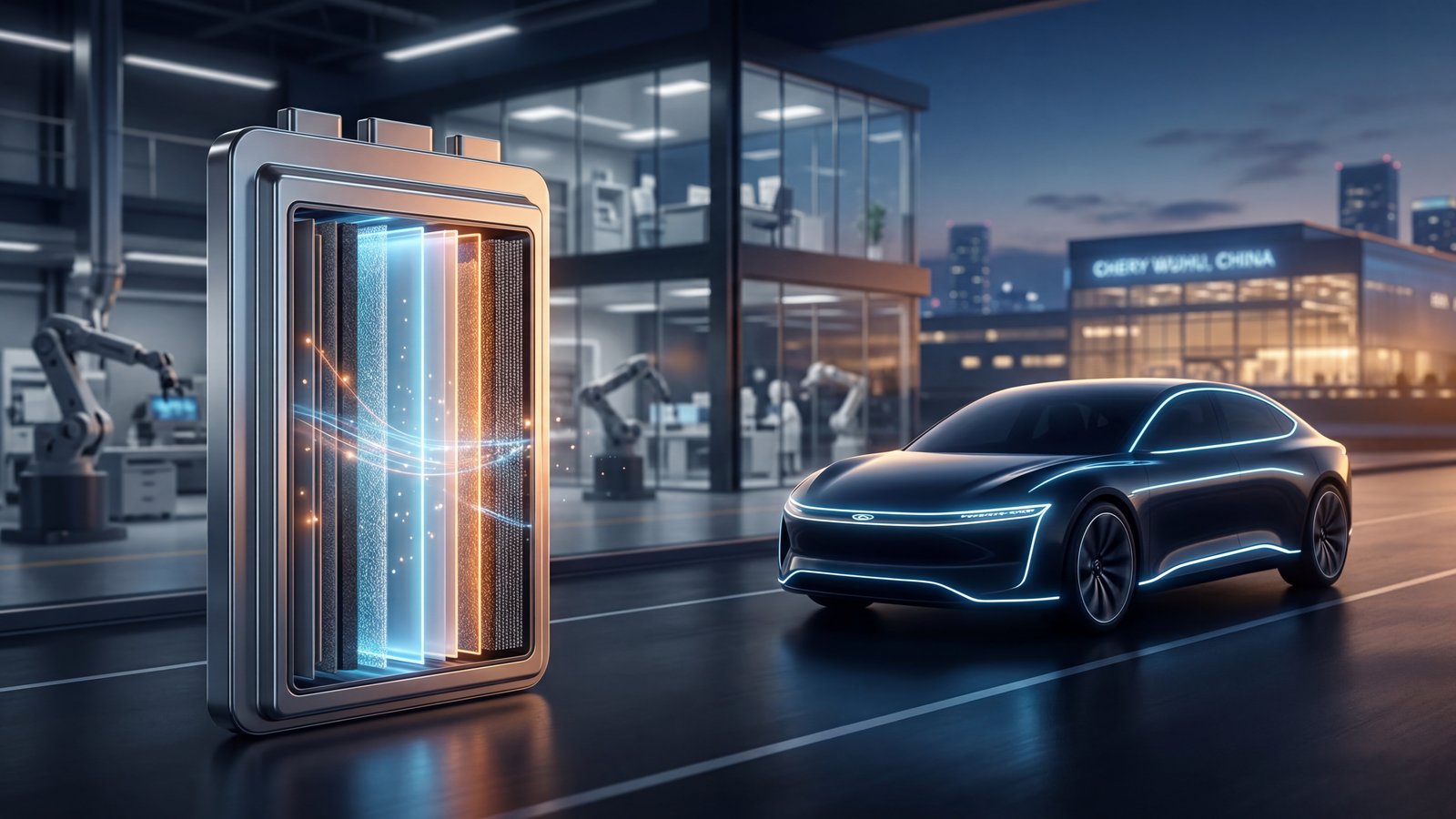
Chery Automobile, one of China’s largest carmakers, will hold its “2026 Chery Automobile Battery Night” in Wuhu, Anhui, on March 18 at 18:30 local time, framing the event around the theme “It’s time to talk about solid-state batteries.” The company says it will introduce a new generation of battery technology and an updated energy system, and several Chinese media outlets report that Chery will disclose its solid-state battery R&D results for the first time. Reports also point to a roadmap that targets limited, directed operations in 2026 and broader mass production in 2027, with pure-electric range potentially exceeding 1,500 km. The event positions battery safety, integration, and commercialization timelines at the center of Chery’s next EV narrative.
The official schedule and how Chery frames the event
Securities Times and Autohome report that Chery officially announced the March 18 event and its theme, emphasizing a focus on solid-state batteries and a broader “new energy system” roadmap. The company’s framing highlights a full-dimension battery safety architecture and a green-energy product lineup, which suggests it is trying to move beyond a single-cell breakthrough and toward a system-level story that covers chemistry, pack integration, and lifecycle safety.
The timing is also deliberate. The battery night is positioned as a dedicated technical showcase rather than a vehicle launch, implying that Chery wants its battery roadmap to stand alongside powertrain and platform narratives as a core brand pillar. That matters in China’s EV market, where consumers increasingly compare range, charging safety, and winter performance as much as they compare infotainment or autonomy features.
Solid-state progress and the reported roadmap
Multiple outlets, including IT Home and D1EV, say Chery plans to disclose its solid-state battery R&D progress for the first time at the event. These reports describe a push that includes solid-state cell development, system integration, and supply-chain preparation, which signals a broader industrialization plan rather than a laboratory update.
The most concrete timeline appearing in media coverage is ambitious: 2026 for limited “directed operations” (often interpreted as pilot deployment or fixed-route use cases) and 2027 for mass production. D1EV and other reports also cite a target of more than 1,500 km in pure-electric range, which would place Chery at the aggressive end of current EV claims in China. These milestones are reported rather than officially confirmed, but the consistency across outlets indicates that Chery is at least allowing the timeline to be associated with its event.
Battery safety and system integration as the key message
Chery’s emphasis on a full-dimension battery safety architecture suggests the company wants to redefine solid-state progress in terms of safety and system reliability, not just raw range. Solid-state batteries are often linked to higher energy density and reduced fire risk, but making those properties reliable at scale depends on manufacturing consistency, thermal management, and pack-level integration.
The “new energy system” phrasing also implies a wider product scope. If Chery uses the event to connect cell chemistry with vehicle platforms, energy storage, and potentially charging infrastructure, the company could be positioning itself as an integrated energy player rather than just a vehicle OEM. That narrative is increasingly common among China’s leading EV makers and battery suppliers, who emphasize end-to-end control from materials to pack-level software. A recent example is BYD’s Blade Battery 2.0 rollout, which highlights how battery roadmaps are becoming core brand messaging.
Market backdrop: China’s EV scale and why solid-state matters
The timing is aligned with rapid growth in China’s EV market. Xinhua, citing data from the China Association of Automobile Manufacturers, reported that China’s 2025 new-energy vehicle production and sales reached 16.626 million and 16.49 million units, respectively, up 29% and 28.2% year over year. The scale of that market means any new battery technology that improves safety or range can have an outsized impact on consumer expectations and fleet economics. Recent deliveries like the Denza Z9GT with Blade battery and flash charging show how quickly battery innovations are reaching showrooms.
With high-volume EV adoption, range anxiety and safety incidents become more visible, and automakers are under pressure to show concrete technology upgrades rather than incremental improvements. Solid-state batteries have long been framed as a next-step leap, but the challenge is translating that promise into manufacturable, affordable, and safe systems. Chery’s battery night is therefore a strategic opportunity to demonstrate progress and signal a credible timeline.
Competitive implications in China’s battery race
Chery is not alone in pursuing solid-state batteries, but a public event centered on solid-state progress helps it stand out in an increasingly crowded field. Chinese automakers and battery makers have discussed solid-state initiatives for years, yet few provide specific timelines or pilot deployment plans. If Chery reinforces a 2026–2027 commercialization schedule, it could raise the bar for peers that are still in prototype or small-batch phases.
At the same time, solid-state commercialization remains technically complex. Even if the underlying chemistry advances, scaling production requires stable yields, supply-chain readiness, and pack-level validation. That means the significance of the event will hinge not only on lab metrics, but on how Chery addresses manufacturing and integration challenges—topics the company appears to be signaling through its “energy system” framing.
What changed and what might happen next
What changed is that Chery is elevating solid-state battery progress to a headline event and tying it to a broader battery safety architecture and energy system strategy, with a reported roadmap for pilot operations in 2026 and mass production in 2027. What may happen next is a clearer industry benchmark: if Chery provides concrete technical details or deployment plans on March 18, competitors may feel pressure to publish their own timelines or upgrade narratives. In a market where EV scale is already massive and consumer scrutiny is rising, the companies that can pair solid-state ambition with credible manufacturing plans are likely to shape the next phase of China’s battery competition.
Sources
- Securities Times — “2026 Chery Automobile Battery Night to open”
https://www.stcn.com/article/detail/3680690.html - IT Home — “Chery Battery Night set for March 18 with solid-state focus”
https://www.ithome.com/0/929/396.htm - D1EV — “Chery battery revolution: solid-state batteries and 1,500 km range target”
https://d1ev.com/newsflash/291518 - Autohome — “2026 Chery Battery Night to open in Wuhu”
https://chejiahao.autohome.com.cn/info/25011298 - Xinhua — “China’s NEV production and sales exceeded 16 million in 2025”
https://www.news.cn/fortune/20260114/cbbd861081c349d8ae238167ca418fa3/c.html