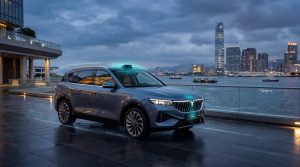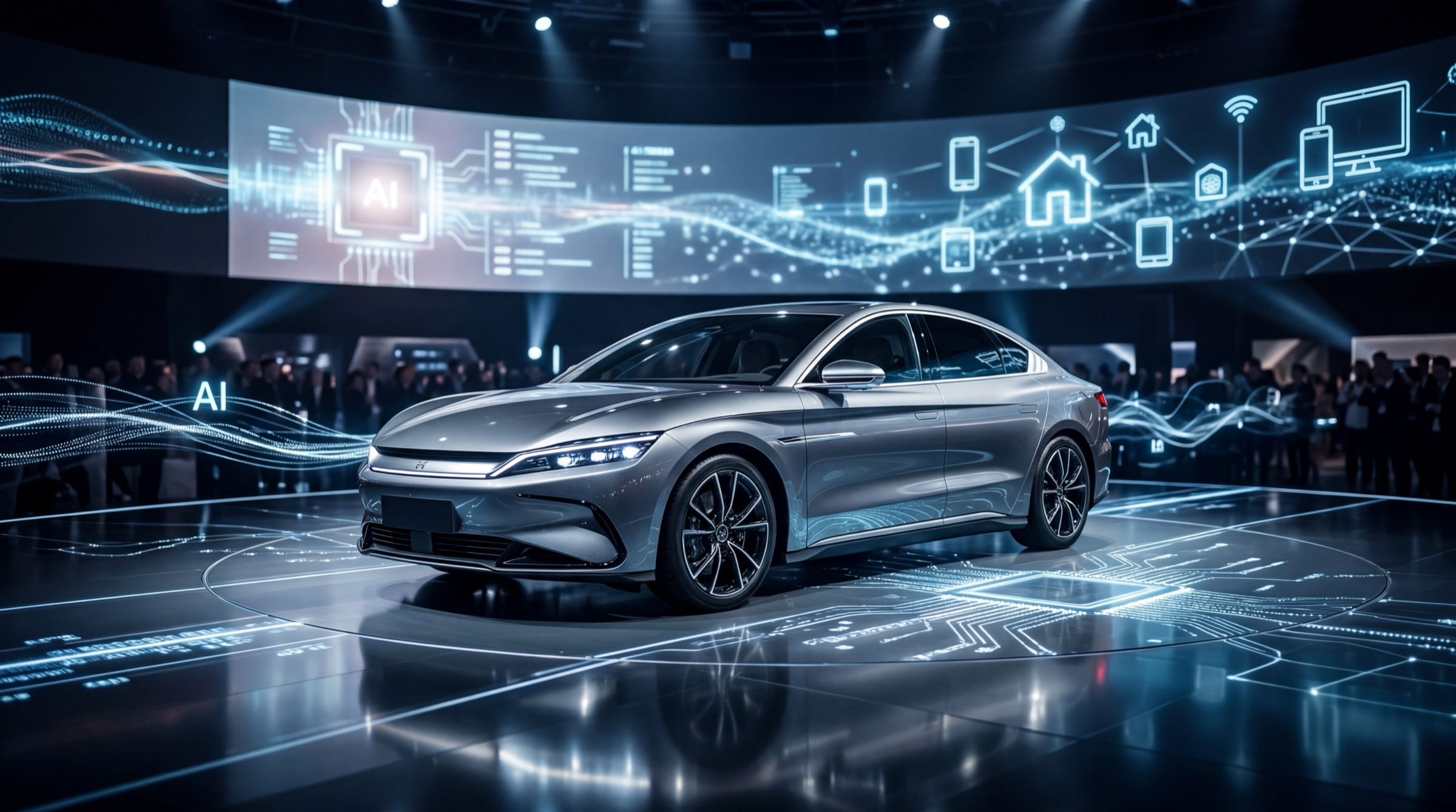
Xiaomi used the launch of its refreshed SU7 sedan on March 19 to make a much bigger statement than a routine model update. Reuters reported that Chief Executive Lei Jun pledged at least 60 billion yuan, or about $8.7 billion, for artificial intelligence over the next three years, while the new SU7 started at 219,900 yuan in Beijing. Bloomberg separately said Xiaomi’s 2026 AI research budget alone will exceed 16 billion yuan. Put together, the message was clear: in China’s electric-vehicle market, competition is no longer only about sticker prices, delivery speed or range. It is increasingly about which hardware company can keep spending at AI scale and turn that spending into a defensible consumer ecosystem.
Xiaomi did not separate the car story from the AI story
The most important part of the March 19 event was not that Xiaomi refreshed a popular sedan. It was that the company deliberately fused two headlines into one investor message. Reuters framed one half of the story around the car itself, saying the updated SU7 was priced from 219,900 yuan as Xiaomi kept pressing Tesla in China. Reuters framed the other half around capital allocation, with Lei promising at least 60 billion yuan of AI investment over three years. Xiaomi could have talked about product upgrades on one day and long-term research budgets on another. Instead, it chose to combine them, which made the launch feel less like a single-vehicle update and more like a statement about what kind of company Xiaomi wants global investors to think it is becoming.
Bloomberg’s same-day reporting helps explain why that framing mattered. The outlet said Xiaomi’s shares rose on excitement around its AI model progress and the upcoming SU7 facelift, and added that Lei said AI research spending in 2026 alone would exceed 16 billion yuan. That number matters because it prevents the 60 billion yuan figure from sounding like a distant promise with no near-term consequence. If the annual AI research budget is already moving above 16 billion yuan in 2026, then the three-year pledge looks like an operating direction, not a marketing slogan.
This was an AI capex signal disguised as a product launch
China’s EV market has spent the past two years training consumers and investors to focus on price cuts, feature lists and monthly delivery rankings. Xiaomi kept one foot in that familiar playbook. Bloomberg reported that the refreshed SU7’s starting price was only about 1.9% higher than the first-generation version, a sign that Xiaomi still wants to look aggressive in a brutally competitive market. But the bigger strategic signal was not the small price increase. It was the attempt to tell the market that Xiaomi can keep product pricing sharp while simultaneously raising the scale of its AI spending.
That is why the refreshed SU7 matters beyond the car category. A company that sells phones, smart-home devices and electric vehicles is now telling investors that AI should be read as a core budget line across the broader ecosystem, not as a side experiment. The distinction is important. The 60 billion yuan commitment is a three-year total, while the more than 16 billion yuan figure cited by Bloomberg refers specifically to 2026 AI research spending. Neither number should be treated as money earmarked only for the SU7 program. The more accurate reading is that Xiaomi is using the car launch to show how AI investment can support a wider hardware platform, from devices to vehicles to future machine interfaces.
Why the Tesla angle matters
The Tesla comparison is not just headline decoration. Reuters explicitly cast the refreshed SU7 as a challenge to Tesla, and that framing is supported by market data from earlier this year. A January SCMP report, citing China Passenger Car Association data, said Xiaomi’s SU7 sold 258,164 units in mainland China in 2025, nearly 30% more than the Tesla Model 3’s 200,361 units. That matters because it means Xiaomi entered the March 19 launch from a position of momentum rather than from weakness. The company was not using an AI pledge to distract from a failed EV effort. It was using that pledge to reinforce an EV franchise that had already proved capable of taking share in China’s largest and most punishing car market.
Xiaomi’s AI positioning is also showing up outside the car category, as we noted in Xiaomi unmasks Hunter Alpha as MiMo-V2-Pro, bringing a hardware giant into the frontier agent race, which framed the company as an increasingly serious hardware-led AI player.
Seen through that lens, the refreshed SU7 pricing becomes more strategic. A starting price of 219,900 yuan is low enough to keep pressure on rivals, but the broader message is that Xiaomi does not want to compete only on near-term affordability. It wants to argue that the next stage of the contest will be decided by who can keep building intelligence into the product stack while still shipping at mass-market scale. That is a more dangerous proposition for rivals than one more round of discounting, because a price war can be copied quickly, while a sustained AI spending program is much harder to match if the balance sheet, software talent and ecosystem breadth are not already in place.
China’s next AI fight is moving from the cloud into the device layer
This is what makes the Xiaomi story different from recent China AI stories centered on cloud pricing or chatbot competition. Much of the recent conversation has focused on whether Chinese cloud providers such as Alibaba Cloud and Baidu AI Cloud are beginning to regain pricing power as infrastructure demand strengthens. Xiaomi points to another phase of the same cycle. Instead of selling AI capacity to enterprise customers, it is trying to absorb AI investment into consumer hardware and vehicles, then use that spending to deepen lock-in across the ecosystem. The important shift is where AI is showing up. It is no longer only a data-center story or a model-lab story. It is increasingly a story about who can embed AI into products that ordinary consumers buy in high volume.
We have already seen the infrastructure side of that shift in our recent analysis on Alibaba and Baidu raising AI cloud prices by up to 34%, where rising cloud prices showed the supply side of China’s AI spending cycle.
That device-layer shift also helps explain why a company like Xiaomi is a useful signal for the broader market. It sits at the intersection of phones, smart-home hardware, software services and now electric vehicles. When a company with that footprint says it will spend at least 60 billion yuan on AI over three years, the implication is broader than one brand or one product launch. It suggests China’s AI race is spreading outward from pure software and infrastructure into the terminal layer of the economy, where cars, phones and connected devices become the delivery mechanism for AI features and ecosystem control.
What changed, and what could happen next
What changed on March 19 is that Xiaomi gave investors a simple new way to read China’s EV competition. The refreshed SU7 was still a car launch, and its 219,900-yuan starting price still mattered. But the bigger shift was that Xiaomi publicly tied vehicle competition to AI spending power. Once that happens, the market is pushed to ask not only which company has the best model or the best sedan, but which company can keep funding AI at double-digit-billion-yuan annual scale while remaining aggressive on hardware pricing.
What could happen next is a broader repricing of how China’s hardware and EV companies are judged. If Xiaomi can keep using AI investment to strengthen its cross-device ecosystem while maintaining EV momentum against Tesla and domestic rivals, then other manufacturers may be forced to show their own AI capex credibility, not just their next model roadmap. That would turn China’s EV war into something larger and more expensive: a contest over who can combine manufacturing scale, software iteration and AI budgets without losing strategic focus. In that sense, Xiaomi’s latest launch changed the frame of the debate. China’s next big AI story may be written less by standalone chatbot champions and more by the companies that can hide vast AI spending inside products millions of people already want to buy.
Sources
- Reuters — Xiaomi to invest at least $8.7 billion in AI over next three years, CEO says (2026-03-19)
- Reuters — China’s Xiaomi unveils upgraded SU7 prices, challenging Tesla (2026-03-19)
- Bloomberg — Xiaomi Shares Jump on AI Model Buzz, Upcoming SU7 Model Facelift (2026-03-19)
- Bloomberg — Xiaomi Prices New SU7 Sedan Just 2% Higher to Sharpen EV Push (2026-03-19)
- SCMP — Xiaomi’s SU7 becomes China’s first Tesla killer, outselling the Model 3 (2026-01-25)