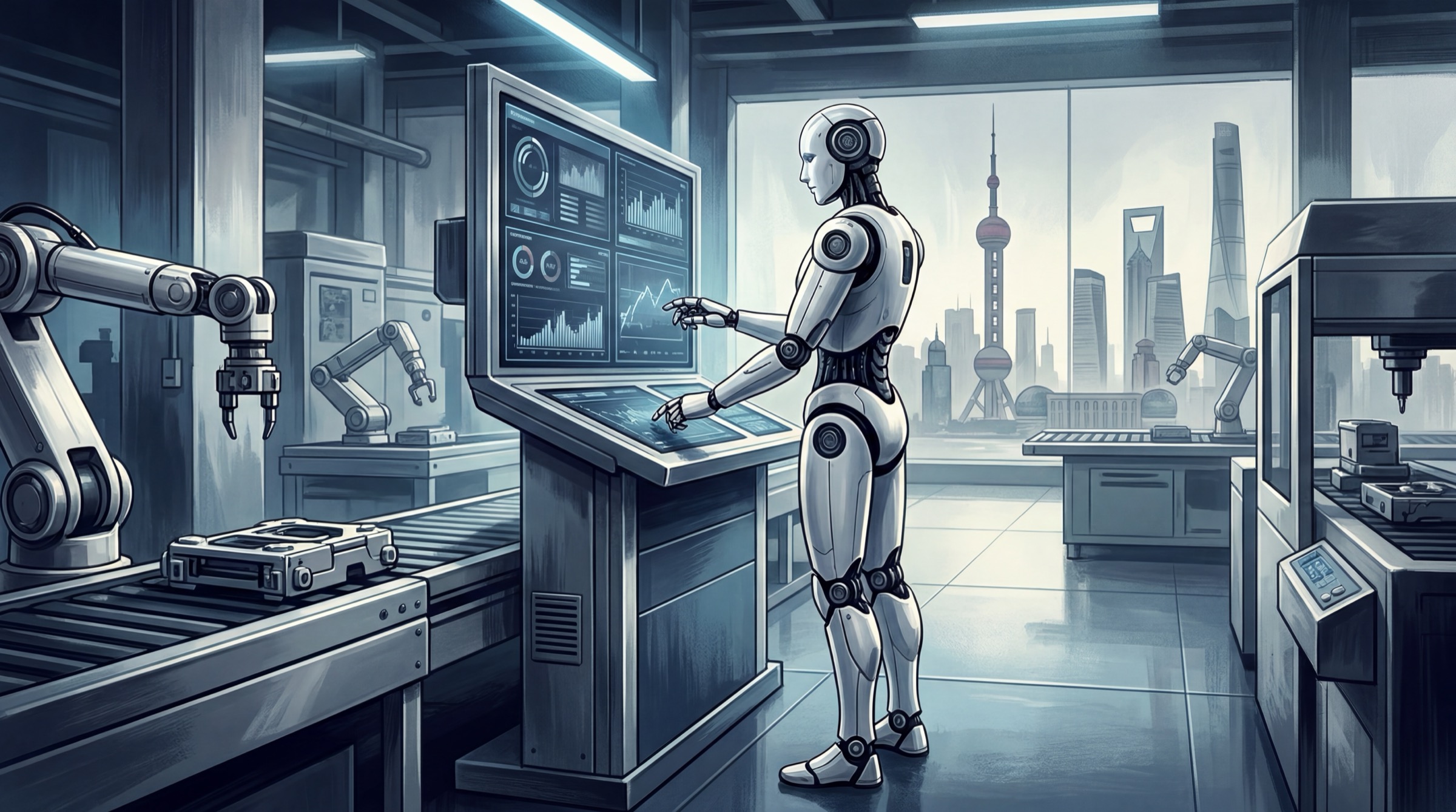
Unitree Robotics said on March 20 that its application for a Shanghai STAR Market IPO had been accepted, with the Hangzhou company seeking RMB4.202 billion, or roughly $608 million to $610 million, to fund embodied-AI model research, robot-body development, new robot products and a manufacturing base. Reuters and other follow-up coverage tied the filing to another standout number: Unitree reported 2025 revenue of RMB1.708 billion, up 335.36% year on year. The bigger story is not simply that a Chinese robot company wants to list. It is that China’s humanoid-robot race is starting to move from viral demos and trade-show excitement into public-market financing, industrial expansion and a more serious test of commercial execution.
This is one of the clearest capital-markets milestones yet for embodied AI in China
The immediate headline is straightforward. The Shanghai Stock Exchange’s STAR Market page showed on March 20 that Unitree’s IPO application had been accepted, with a planned raise of RMB4.202 billion. Reuters, Bloomberg and SCMP all treated that filing as more than a routine equity story, because it arrives at a moment when humanoid robots have become one of China’s most aggressively watched hardware themes. In that sense, the filing gives investors something they have not really had before: a cleaner public-markets lens on a Chinese embodied-AI company whose pitch ties software, hardware and manufacturing together.
That matters because much of the global AI narrative has been dominated by cloud spending, foundation-model competition and semiconductor controls. Unitree points readers toward a different China story. Instead of asking how quickly a platform company can monetize AI software, the filing asks whether a robotics company can industrialize embodied AI at scale. The location also matters. A STAR Market filing in Shanghai places the story squarely inside China’s domestic capital-market system, rather than framing it as a venture round or an overseas listing proxy.
Unitree is trying to finance software, hardware and factory build-out at the same time
The most important detail in the filing is not only the amount of money Unitree hopes to raise, but where the money is supposed to go. Chinese prospectus summaries relayed by financial media said the proceeds would be directed to intelligent-robot model research, robot-body research and development, new intelligent robot product development, and construction of an intelligent-robot manufacturing base. Bloomberg’s coverage captured the same basic point in shorter form: the company wants to fund AI models and new robot development. Taken together, those details show why this story is stronger than a simple IPO brief. Unitree is packaging models, machines and factory capacity into one financing plan.
That combined spending logic is important for English-language readers because it captures how embodied AI commercialization works in practice. A humanoid-robot company cannot scale the way a pure software company does. It needs better models, but it also needs more reliable hardware, new product iterations and enough manufacturing depth to move beyond low-volume demonstration units. In other words, the financing plan is really a map of the company’s ambition: not just to design impressive robots, but to turn them into an industrial business.
The 2025 numbers suggest China’s robot boom is moving beyond the lab stage
Unitree’s 2025 revenue figure is one reason the IPO resonated so quickly. Reuters said the company posted RMB1.708 billion in 2025 revenue, up 335.36% from a year earlier. That is the kind of triple-digit growth number that instantly changes the tone of the conversation. Without it, the filing might read like a speculative bet on future demand. With it, the story becomes more concrete. Investors can at least point to a year of sharp top-line expansion while China’s humanoid-robot enthusiasm was rising.
There is also a product-scale signal here, even if it needs careful handling. Chinese prospectus summaries cited by financial outlets said Unitree shipped more than 5,500 humanoid robots in 2025. If that figure holds up under fuller scrutiny, it suggests the market is no longer dealing only with prototype-stage curiosity. It suggests there is already a meaningful delivery story taking shape. But this is also where discipline matters. The shipment figure comes from prospectus-related summaries and relayed reporting rather than a broad independent industry audit, so the safest formulation is that the prospectus summary says shipments topped 5,500, not that the entire global market has already validated every competitive claim around the company.
The filing still tests investor confidence more than it proves victory
For all the excitement around the March 20 acceptance, the filing has to be read with at least three caveats. First, accepted does not mean approved. Unitree has filed for a STAR Market listing, and the application has been accepted for review, but it has not completed the listing process. Second, RMB4.202 billion is a planned raise, not money already in hand. That is important because the company’s financing narrative is strong, but public-market appetite still has to be tested through a longer approval and subscription process.
Third, the profitability story is not as clean as the revenue story. Prospectus-related Chinese reporting cited roughly RMB288 million in 2025 net profit, while SCMP referred to adjusted profit of about RMB600 million. Caixin Global added further financial color from prospectus details and prior periods, but the overall lesson is that profit figures can vary depending on definition and time frame. That does not make the filing weak. It simply means revenue growth, use of proceeds and filing status are the firmest anchors, while profitability and valuation deserve a more cautious treatment.
That caution is especially important because humanoid robots remain an early commercial category. Even if Unitree becomes one of the cleanest listed proxies for China’s humanoid push, investors will still need to answer harder questions later: how durable demand really is, how quickly the manufacturing base can scale, whether hardware margins can hold up, and whether customer enthusiasm extends beyond eye-catching demonstrations. The IPO filing opens a door. It does not settle the commercialization debate.
What changed, and what comes next
What changed this week is that China’s embodied-AI story gained a clearer financial structure. Before March 20, humanoid robots were easy to discuss as a technology trend, a viral-video category or a policy-favored strategic sector. After Unitree’s accepted STAR Market filing, the same story can be discussed in terms of planned proceeds, manufacturing capacity, product development and revenue growth. That is a material shift in framing. It turns a hot theme into something closer to an investable industrial narrative.
What comes next is the more demanding phase. Unitree will need to move through the STAR Market review process, convince investors that RMB4.202 billion can be productively deployed, and show that its 2025 revenue surge was not a one-off spike tied to peak market excitement. If the process advances, Unitree could become one of the most visible listed markers of China’s attempt to industrialize humanoid robots. If it stalls, the setback would be a reminder that excitement around embodied AI still has to survive the disciplines of disclosure, valuation and public-market scrutiny. Either way, the signal is already meaningful: China’s robot race is no longer only about showing what machines can do. It is increasingly about proving what kind of business they can become.
Related reading
- Xiaomi Says Humanoid Robots Are Already ‘Interning’ on Its EV Factory Floor
- Westwell IPO Update Signals China’s Industrial AI Push
Sources
- Shanghai Stock Exchange — IPO review page for Unitree Robotics Co., Ltd. (2026-03-20)
- Reuters — Unitree plans Shanghai IPO, testing interest in humanoid robots (2026-03-20)
- Bloomberg — China’s Unitree Robotics Files for $610 Million Shanghai IPO to Fund AI (2026-03-20)
- SCMP — China’s Unitree Robotics rides humanoid tide as it targets US$610m IPO (2026-03-20)
- Sina Finance — Unitree’s STAR Market IPO filing is accepted: plans to raise RMB4.202 billion after about RMB1.708 billion in 2025 revenue (2026-03-20)
Editorial caveats: Treat the STAR Market move as an accepted filing, not a completed listing. Treat RMB4.202 billion as the planned raise, not final proceeds. Treat the 2025 revenue growth of 335.36% as the clearest operating signal, while keeping profitability figures and valuation expectations in caution territory because reported profit metrics differ by outlet and humanoid-robot commercialization is still at an early stage.