The U.S. Department of Justice on March 19 unsealed charges against three people tied to Super Micro, including co-founder Yih-Shyan “Wally” Liaw, alleging they helped move roughly $2.5 billion worth of AI servers and related U.S. technology to China through companies in Taiwan and Southeast Asia. Follow-up reporting from Reuters, AP and NBC News says the scheme involved rerouting, reboxing or relabeling hardware, with one batch worth about $510 million ultimately ending up in China. The significance is bigger than one criminal case: Washington is signaling that China-bound diversion of AI infrastructure is no longer just a compliance gray zone, but an enforcement priority serious enough to produce named defendants, corporate fallout and broader supply-chain scrutiny.
The case turned a long-running export-control fear into a named criminal file
The most important shift in this story is not simply that U.S. officials believe restricted AI hardware kept moving toward China. That concern has existed for some time. What changed on March 19 is that the DOJ converted that concern into a public criminal case with names, dates, alleged routes and a large dollar figure. According to the DOJ, three defendants — Liaw, Ruei-Tsang “Steven” Chang and Ting-Wei “Willy” Sun — were charged in connection with an alleged conspiracy to unlawfully divert advanced U.S. artificial-intelligence technology to China.
That matters because criminal charges create a different level of accountability pressure from a generic export-control warning, a policy speech or a market rumor. Once prosecutors say a network moved through specific intermediaries and attach a figure as large as roughly $2.5 billion, the story stops being an abstract discussion about loopholes. It becomes a test case for whether the United States can actually police the AI hardware supply chain once goods leave obvious channels and start moving through regional trading entities.
The timing also helps explain why the story has broader reach than a normal legal brief. Reuters, AP and Bloomberg all followed the unsealing the same day, while NBC News and The Wall Street Journal added detail on March 20. That wave of coverage moved the story out of the legal pages and into the mainstream tech, finance and geopolitical conversation. The topic is no longer only whether export controls exist. It is whether they work once there is enough money, enough demand and enough regional intermediaries in the chain.
China is the center of the story, not a background reference
This is not a vague story about sanctions enforcement somewhere in Asia. The core issue is China as the alleged final destination for advanced AI infrastructure. That is what gives the case much of its editorial force. The hardware at issue was not ordinary consumer electronics, and the alleged destination was not left murky. The reporting summarized in the round_203 source brief repeatedly points to China as the market the servers and related U.S. technology were ultimately meant to serve.
That point is important because it ties the case directly to one of the biggest strategic questions in the AI race: whether China can still obtain enough high-end infrastructure to support model training, data-center expansion and broader national AI ambitions despite tighter U.S. controls. If the allegations are accurate, the case suggests that formal rules alone did not fully stop that flow. Instead, the hardware allegedly kept moving through Taiwan- and Southeast Asia-linked entities, with some shipments being repackaged before heading on to China.
NBC’s detail about a batch worth about $510 million is especially useful because it turns the broader $2.5 billion figure into something more tangible. Readers can understand a supply-chain case more clearly when it includes a concrete shipment value, a concrete routing method and a concrete final destination. That does not prove every part of the alleged network worked exactly as described, because the case is still at the accusation stage. But it does make the broader point harder to dismiss: China-bound AI hardware controls may be much leakier in practice than policymakers would like to suggest.
This is not the same as saying Super Micro has been convicted
A major reporting risk here is overstatement. The clean version is that the defendants were charged, not convicted. Another essential caveat is that the public material summarized in the source pack does not say Super Micro itself has been criminally convicted. The safer and more accurate phrasing is that the case involves people tied to Super Micro, including co-founder Wally Liaw. That distinction is not cosmetic. It is central to keeping the story fair and factually correct.
That is also why the article should not drift into a simplistic conclusion that every China-bound AI server now moves through smuggling networks, or that one company alone defines the whole problem. The stronger analytical line is more structural. The case appears to show how a large China-facing demand signal can interact with regional intermediaries, reboxing and transshipment to create a route around controls that were supposed to block sensitive hardware flows.
In that sense, the story is bigger than one defendant list. It illustrates a wider enforcement problem: AI infrastructure is physically movable, commercially valuable and often routed through jurisdictions that are deeply integrated into Asian electronics trade. If U.S. policy assumes that writing down a rule is the same as sealing every logistics path, this case argues otherwise. The practical reality may be that controls remain porous until prosecutors, customs agencies and companies start treating diversion risk as an operational fact rather than a theoretical possibility.
The U.S. is escalating from compliance language to criminal enforcement language
That change in tone is one of the most important takeaways from the case. In many earlier China-tech stories, the emphasis was on restrictions, license rules, blacklists or company guidance around what could or could not be sold. This round is different. It pushes the China AI hardware question into criminal-enforcement territory.
That matters because criminal enforcement changes incentives across the supply chain. Distributors, regional trading firms, freight handlers and even internal compliance teams have to think differently when the risk is no longer only a fine or a delayed shipment, but a public prosecution. A named case also sends a message to other would-be intermediaries: if you help move restricted AI infrastructure toward China through relabeling, reboxing or transit hubs, the U.S. may try to treat you not as a paperwork violator but as part of a criminal conspiracy.
This is also what makes the round_203 story so different from the previous few rounds. Round_199 was about Unitree and robotics capital markets. Round_200 was about Chinese EV safety rules. Round_201 focused on Alibaba and Tencent after earnings. Round_202 centered on Xiaomi’s AI spending and model identity. Those were company strategy, product or market-structure stories. This one is about enforcement risk, export-control leakage and the criminalization of China-bound AI infrastructure diversion. It belongs to a different editorial bucket altogether.
The case also creates a company-governance problem
The legal narrative is only one layer. The WSJ reporting cited in the source brief adds a second one: governance. If Super Micro has already put Liaw on leave, as reported, then the story is no longer confined to prosecutors and customs questions. It becomes a boardroom and reputational issue as well.
That shift matters because modern AI hardware stories rarely stay limited to the technical product itself. Once a major supplier or a supplier-linked figure appears in a high-profile criminal case, customers, investors and partners start asking a broader set of questions. How strong were the internal controls? Who approved the relationships? What did executives know? How much of the risk sat with the company versus outside intermediaries? Even before any court result arrives, the governance burden arrives early.
For Super Micro-linked actors, the case may therefore carry two parallel costs. One is legal. The other is commercial. A company can emerge from a fast-growing AI infrastructure market only to find that supply-chain trust, internal oversight and customer confidence have suddenly become part of the valuation story. That is why Bloomberg’s framing of the case as a high-profile crackdown matters. It tells the market that this is not only about shipping boxes. It is about how Washington increasingly sees the strategic value of those boxes when the end market is China.
What changed, and what could happen next
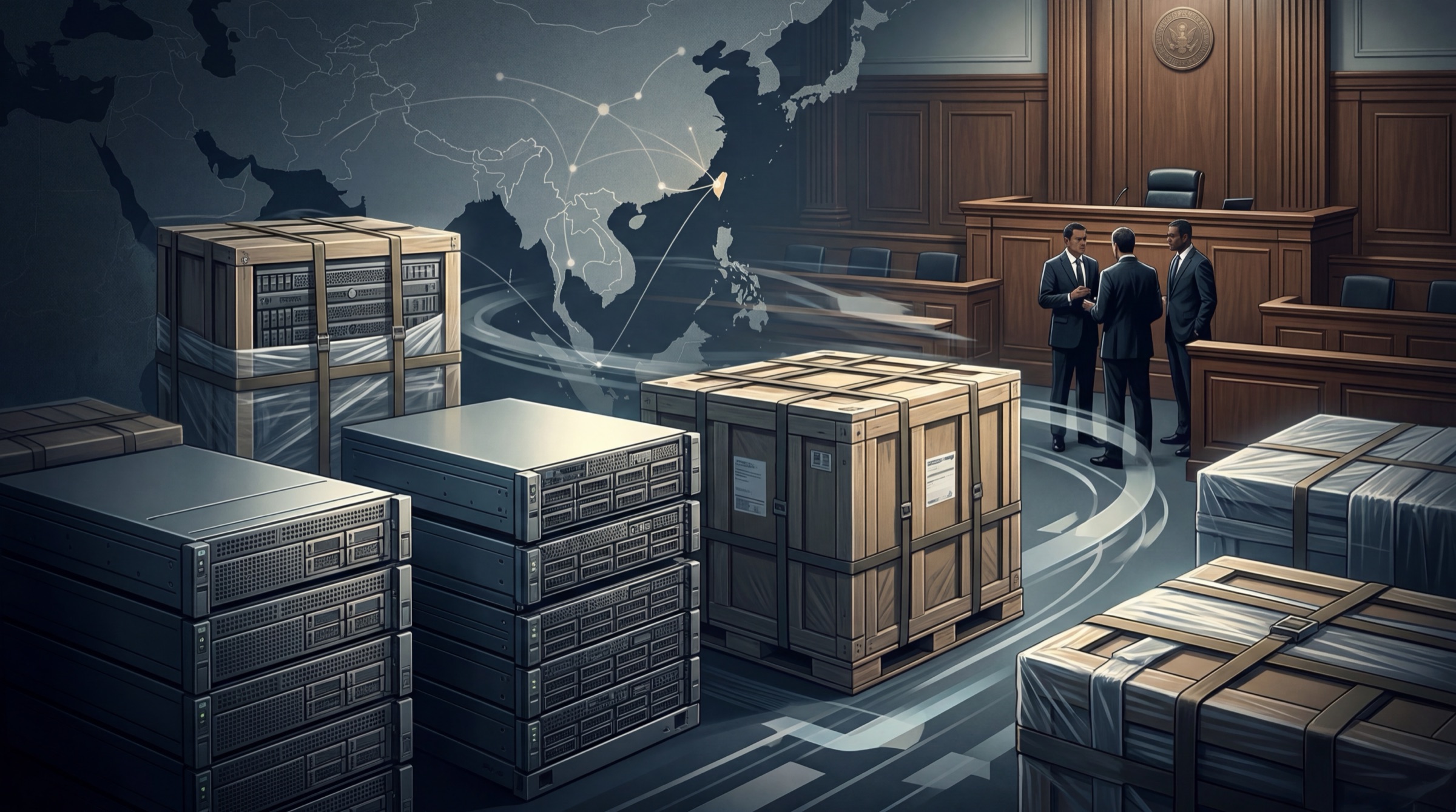
What changed on March 19 is that the U.S. government took a category of concern that had often been discussed in broad policy terms and turned it into a concrete criminal case. The allegations say high-performance AI servers and related U.S. technology worth about $2.5 billion were routed through Taiwan and Southeast Asian channels toward China. Subsequent reporting added the more granular picture of reboxing, rerouting and at least one roughly $510 million batch ultimately reaching China. That combination of legal action and logistics detail makes the story much more consequential than a routine export-control headline.
What could happen next is a broader tightening across the regional AI hardware chain. More scrutiny of intermediary firms in Taiwan and Southeast Asia would be a logical next step. So would stronger due-diligence expectations for server makers, logistics operators and channel partners whose goods could be redirected toward Chinese buyers. At the same time, Chinese demand for AI infrastructure is unlikely to disappear. That means the deeper strategic issue will remain: as long as China still wants advanced AI capacity and U.S.-linked hardware remains highly valuable, attempts to route around controls may keep appearing in new forms.
The most careful conclusion is therefore not that this single case proves every allegation or that the U.S. has already solved the diversion problem. It is that Washington has unmistakably raised the stakes. China-bound AI infrastructure diversion is no longer being framed only as a compliance failure or a loophole in a policy regime. It is now being framed, at least in this case, as conduct serious enough to justify criminal charges, public naming and a wider warning to the hardware supply chain that the AI chip war with China has entered a more punitive phase.
This story also reads more clearly alongside Nvidia says China H200 orders are in as Reuters reports Beijing approval and a Groq inference play and Tencent Says It Will More Than Double AI Product Spending in 2026 After U.S. Chip Curbs Slowed Capex, because both show that China-related AI capacity questions are already being shaped by U.S. controls and supply constraints, not only by company strategy.
Sources
- U.S. Department of Justice — Three Charged with Conspiring to Unlawfully Divert Cutting Edge U.S. Artificial Intelligence Technology to China (2026-03-19)
- Reuters — US charges 3 tied to Super Micro Computer with helping smuggle billions of dollars of AI chips to China (2026-03-19)
- AP — 3 men are charged with conspiring to smuggle US artificial intelligence technology to China (2026-03-19)
- NBC News — Three men charged with illegally smuggling advanced AI chips into China (2026-03-20)
- The Wall Street Journal — Tech Exec Accused of Smuggling Nvidia Chips to China (2026-03-20)
Editorial caveats: Keep the wording at the allegation stage throughout: the defendants were charged and accused, not convicted. Do not write Super Micro itself as a convicted party based on the currently cited material. The most durable editorial angle is not that one company tells the whole China AI story, but that this case suggests China-bound AI infrastructure controls may still be porous enough to produce large diversion networks and, now, criminal prosecutions.